An American proposal has returned to circulation to establish a special brigade equipped with American weapons and technology, to be a direct tool for implementing Resolution 1701 through the deployment of the Lebanese army south of the Litani and disarming Hezbollah. Washington’s declared goal may be clear, which is to reduce the party’s influence and strengthen the authority of the Lebanese state, but this proposal, although it seems ambitious, faces internal, political and popular challenges, starting from viewing it as a step imposed from the outside, all the way to considering it a prelude to a direct confrontation with the party, with the serious repercussions it carries on the internal political climate.
Hence, the deployment in the south remains dependent on political decisions and internal balances more than any external support. In this context, the strategic expert, retired Brigadier General Naji Mulaeb, refers to a statement by US Secretary of State Marco Rubio, following the recent negotiations in Washington last week, where he said that “a special squad from the Lebanese army should be trained to be able to implement the government’s decision to disarm Hezbollah.”
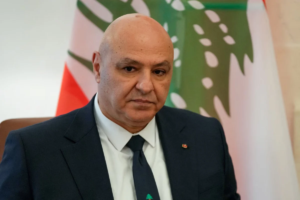
Brigadier General Malaeb stops at Minister Rubio’s statement, stressing to “Lebanon Debate” that it seemed remarkable, especially if it was actually followed by the Ministry of Defense in Lebanon, as the talk about training a special squad is a proposal that goes beyond the mere deployment of the army in the south, and raises questions about the nature of the role that the military institution is intended to play. According to Malaeb, it is still early to talk about the army’s deployment in the south, as long as Israel has not ended its military operations.
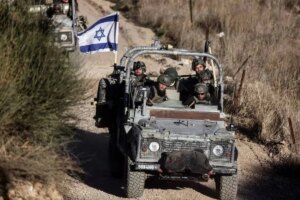
In what is further and more dangerous than the American proposal, Malaeb goes on to reveal expectations that the southern square will witness “security surprises” before the end of the month, or the date set in Washington to launch a security track, explaining that Israel seeks to expand its area of control in the south so that it can sit at the negotiating table holding in its hand a strong card and an additional pressure tool, by occupying more lands in addition to those it currently occupies.
In this context, Malaeb points out that the military meetings in Washington are looking into a comprehensive solution for the period after the International Emergency Forces or UNIFIL in the south, whose mission ends at the end of this year. What is noteworthy, according to Malaeb, is that UNIFIL already began unloading its equipment months ago, and transferred a quarter of its numbers from Lebanon, with the second quarter to be transferred soon, which reflects the decline of its practical role in the south, and therefore, these forces no longer have any tasks.
The main question asked today, as Malaeb adds, is: “Who will be the replacement for the international emergency forces in a few months? Will the Lebanese army be deployed on the border only after rebuilding the bridges that Israel demolished, or will it return to control the region in accordance with what was stipulated in Resolution 1701, that is, with combat missions, while the role of the international forces is limited to support? Will the future forces come by a Security Council decision in accordance with Chapter Seven, or through an international coalition outside the Council, as happened in Gaza?”
On the other hand, it is known that the Lebanese Army had proposed a more realistic plan, which calls for recruiting 1,500 additional personnel with international funding, with a long-term plan to recruit 6,000 personnel if resources are available.
However, the financial reality imposes strict restrictions on the plan, as current international funding does not exceed $200 million, while actual needs exceed one billion dollars. This deficit makes the army’s plan a practical option, but it has limited impact, unless accompanied by additional funding and internal political consensus.
From the above, it is clear that the American proposal to establish a special brigade reflects an international ambition rather than an implementable plan in Lebanon. While the army seeks to strengthen its capabilities within the available capabilities, supported by limited international funding, the financial and political challenges it faces make any wide deployment south of the Litani contingent on a larger deal whose features will become clear in the upcoming negotiations on the 29th of this month in Washington.