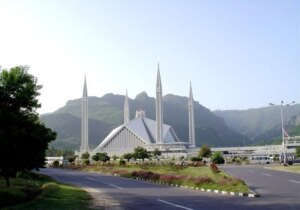
Today, Friday, all eyes are on Islamabad, where it is scheduled to receive two high-level delegations: an American delegation led by Vice President J.D. Vance, and an Iranian delegation headed by Parliament Speaker Mohammad Bagher Qalibaf. The aim of this visit is to hold direct talks between the two parties, in the hope of reaching an agreement to end the ongoing war, in light of a truce that was announced two days ago and extends for two weeks. In this context, questions are increasing about the conditions and demands held by each party.
It is noteworthy that the Iranian side recently revealed some basic points of a plan consisting of ten items, which it believes will be a basis for negotiations with the United States.
These provisions included proposals for a new status in the Strait of Hormuz, lifting international sanctions imposed on Iran, “accepting” uranium enrichment while discussing its levels, in addition to ending the war on all fronts, including Lebanon.
The ten proposals also included the withdrawal of American combat forces from all military bases and points deployed in the region, and the payment of compensation to Tehran for the damage resulting from the war.
In addition, the plan called for the cancellation of the decisions issued by the Board of Governors of the International Atomic Energy Agency and the Security Council against Tehran, and the release of all Iranian assets and funds frozen abroad, and called for these arrangements to be approved in a binding resolution issued by the UN Security Council, and for the agreement to be transformed into binding international law to ensure its implementation.
On the other hand, American officials have repeatedly emphasized the importance of opening the Strait of Hormuz and restoring shipping traffic to it safely.
US President Donald Trump had warned earlier today against imposing fees on cargo ships crossing the strait, after Tehran agreed to reopen this vital corridor as part of a two-week ceasefire agreement.
Trump also repeatedly stressed that Washington will not allow Iran to possess a nuclear weapon or enrich uranium, while downplaying the importance of extracting the remaining highly enriched uranium inside Iran.
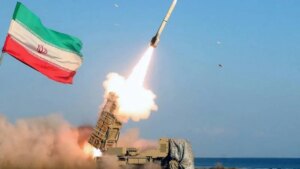
For its part, the Trump administration seeks to put an end to the Iranian missile program, especially long-range missiles, and demands an end to support for armed groups in the region, especially in Iraq and Lebanon.
Iranian Vice President, Mohammad Reza Arif, confirmed that his country will actively participate in the negotiations, while Trump expressed yesterday evening his optimism about the possibility of reaching an agreement.
However, some analysts believe that the demands of both parties, and Tehran’s insistence on enrichment or controlling the Strait of Hormuz in any way, may hinder the talks, which are expected to not be easy at all, despite the large losses incurred by the Iranian side during the war.