As military tension between the United States, Israel, and Iran continues, significant criticism has emerged from within the former US intelligence community, highlighting weaknesses in military assessments during the recent confrontation.
In this regard, Larry Johnson, a former CIA analyst, stated that the losses incurred by Washington in advanced military equipment are mainly due to “overestimation of capabilities,” and not to a lack of preparedness.
“It is not a matter of their lack of preparedness, but rather of excessive optimism about the capabilities of the US Army,” Johnson said in a statement to the “Novosti” agency, explaining that this inaccurate assessment directly affected the effectiveness of the defensive performance during the clashes.
He added that before the start of operations, there was widespread belief in military circles that American missile defense systems were capable of repelling Iranian attacks with high efficiency, but the facts on the ground showed the opposite, noting that “these systems were not as effective as they were promoted.”
He continued: “American bases in the region have become vulnerable to Iranian attacks, and even with the operation of air defense systems, their effectiveness does not exceed 20%, while about 80% of the missiles pass without interception,” which clearly indicates the restrictions imposed on the defense capacity in the face of intensified attacks.
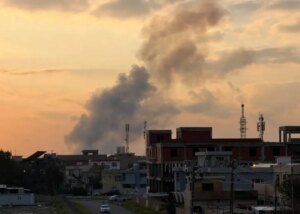
Johnson explained that the Iranian attacks targeted sensitive sites, as Tehran was able to destroy American aircraft, radars, and air defense systems at several bases spread across the Middle East, which raises questions about the actual level of protection for these facilities.
On February 28, the United States and Israel began a series of attacks targeting sites inside Iran, as part of a military operation aimed at weakening its military capabilities. Tehran quickly responded by launching missile attacks on Israel, as well as American sites and interests in the region.
This escalation comes in the context of an open conflict that is gradually taking a regional form, amid warnings of the expansion of the scope of the conflict and its transformation into a broader confrontation, especially with the increase in the frequency of attacks and the exchange of direct military messages between the parties.
This development also reflects a shift in the rules of engagement, as the conflict is no longer limited to limited strikes, but now includes direct targeting of sensitive military infrastructure, increasing the level of risks to regional stability.