In the midst of Israel and the United States escalating their raids inside Iran, fears are increasing of a similar slide on the Lebanese front, where military operations appear to be following a complex field path, lacking a clear political vision of what will happen after the end of the fighting.
According to a report by journalist Avi Ashkenazi in “Maariv,” the war, which lasted for nearly a month, witnessed significant tactical gains for the Israeli army and the American army, but the strategic picture is still unclear, with the difficulty of assessing the final results at this stage.
The report explains that attacks inside Iran have witnessed a change in targets in recent days, as the Israeli army focused on 3 main axes: first, targeting Iranian air defense systems with the aim of paving the way for the air force to expand deep into Iran; Secondly, striking ballistic missile launchers used to target Israel and the Gulf states. Third, it strikes the infrastructure of military industries, including major factories, development centers, secondary suppliers, all the way to small workshops and specialized laboratories.
The strikes also targeted facilities linked to the nuclear program, including the heavy water site in Arak, in addition to steel factories, as part of an attempt to create a kind of “scorched earth,” so that Tehran finds itself facing difficulty in rebuilding its military and security capabilities in the near and medium term.
In the same context, the United States and Israel seek to impose conditions for any future settlement, including the delivery of enriched uranium, ensuring freedom of navigation in the Strait of Hormuz, and imposing oversight on the ballistic missile program. However, the challenge, according to the report, lies in Iran’s ability to rebuild its capabilities, taking advantage of its resources and alliances with countries such as China, Russia, North Korea, and Venezuela.
In parallel, another regional dimension is emerging, which is the threat to shipping traffic, especially after the launch of a missile from Yemen towards Israel, which reinforces fears that the Houthis will move to disrupt navigation in the Red Sea, which may push towards the formation of a regional alliance that includes Egypt, Jordan, Saudi Arabia, and the UAE to ensure the security of sea lanes.
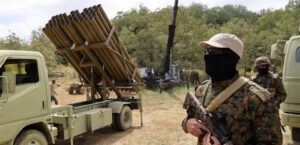
But in contrast to this escalation in Iran, the Lebanese front seems to be the most sensitive. The report conveys testimonies from northern Israel stating that the Israeli army mobilized tens of thousands of soldiers in southern Lebanon and on the border, and stationed themselves in positions close to the border line, from hundreds of meters to a few kilometers, before stopping and adopting what is known as “forward defense.”
This positioning, according to estimates, puts the forces in a weak position, as they are exposed to intense fire from Hezbollah, including anti-tank missiles and indirect shells, which has led to an increase in the number of casualties in recent days.
The report indicates that the Israeli plan is based on advancing towards the Litani River and establishing a demilitarized zone between it and the Blue Line, in an attempt to reformulate the “security belt,” but under new names such as “front defense line” or “northern yellow line.”
However, this trend raises fears of a repetition of previous experiences, as this region may turn into something resembling a “field of attrition,” in the absence of a clear political plan for the next day, which reflects Israel’s entry into southern Lebanon “with a large military force, but with a limited amount of political thinking.”
The report concludes that the continuation of operations without determining a final path raises serious questions within Israel itself about the goals and outcomes of the war, at a time when the fronts from Iran to Lebanon overlap, which complicates the regional scene and makes any error in judgment costly on more than one level.