– Muhammad Al-Madani
Every time Lebanon goes through a delicate stage, the usual question arises: What will Hezbollah do? But the most important question that must be asked today is: What will the Lebanese state do? The current situation is not a test of one party’s reaction, but rather a test of the state’s ability to prove itself as a supreme authority after years of hesitation and temporary settlements.
The decision to expel the Iranian ambassador from Lebanon carries deep political connotations. It is, essentially, an announcement of Lebanon’s attempt to redefine its sovereign borders in the face of external interference. But this step cannot be understood in isolation from the previous Lebanese experience, specifically the events of May 7, 2008, when the state took an apparently similar decision, but it was fundamentally different. The response was quick and decisive, and the state ended up retreating under the weight of field pressure.
Today, the comparison is fresh in our minds, but it is inaccurate. In 2008, the decision directly targeted Hezbollah’s security structure, a vital artery that could not be tolerated. Today, the decision to expel the Iranian ambassador affects the political and regional dimension of the party, not its direct military structure. This is a fundamental difference that necessarily affects the nature of the expected responses.
But the most important difference is not limited to the nature of the decision, but rather to the changing conditions. The region is not what it was, Syria is not what it was, and even Iran is facing unprecedented pressure. Internally, Lebanon is on the verge of a comprehensive collapse, as any security explosion will not be just a limited round, but may turn into a complete collapse that is difficult to control.
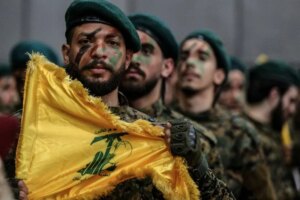
In this context, the question arises: Does Hezbollah have the ability to repeat the May 7 scenario? maybe. But does he have the luxury to make this decision? The cost today is much higher, not only for his opponents, but also for him, politically, popularly, and economically. The party, which has become part of the power structure, no longer moves from outside the state, but from within it, and any direct clash with it will place it facing a complex equation whose results are difficult to control.
On the other hand, the Lebanese state is not in a position of absolute power that allows it to engage in an open confrontation. Its experience in 2008 is still present, and its political structure is still fragile, which makes it tend, by experience, to manage crises rather than resolve them. This opens the door to a more realistic scenario. There is no complete retreat, nor open confrontation, but rather a gray area in which decisions are managed with precise calculations, where the ceiling rises politically and falls on the ground.
The problem is that this type of administration, although it avoids explosion, does not build a state. Because a state is not only measured by its ability to avoid crises, but rather by its ability to make clear decisions and bear their consequences. Therefore, continuing the “half-decision” policy means keeping Lebanon in a state of limbo, where there is no sovereign decision and no real stability.
What is happening today is not just a confrontation between a decision and a reaction, but rather a decisive moment in the course of the Lebanese state. Either this step will turn into the beginning of a clear path that restores respect to the concept of sovereignty, or it will end, as previous stations ended, with a settlement that empties the decision of its content.