Major European countries refused to cooperate with US President Donald Trump regarding securing navigation in the Strait of Hormuz, as well as participating in any military operations against Iran. This move raises question marks about the future of NATO.
Information indicates that European leaders refuse to participate directly in American and Israeli military operations against Iran, for fear of being drawn into a conflict that has unclear definitions and does not enjoy popular support in their country.
European officials believe that remaining neutral carries benefits that outweigh the risks, given the increasing pressures on transatlantic relations, from the war in Ukraine to trade disputes.
According to available data, the Europeans sought to avoid angering Trump, fearing that this would affect his positions on the war in Ukraine or push him to pressure Kiev to accept a settlement that serves Moscow’s interests.
Trump’s positions, including the proposal to control Greenland, which belongs to Denmark, also raised concern within the corridors of the alliance, which increased doubts about NATO’s cohesion.
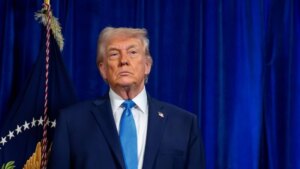
Trump commented on the European position, describing their refusal to join military operations in Iran as a “very stupid mistake.”
In Germany, Chancellor Friedrich Merz expressed his categorical rejection of military involvement, stressing the need to prevent Iran from threatening its neighbors, but he questioned the justifications for the war.
Meretz said before Parliament: “Until now, there is no convincing plan for the success of this operation, and we have not been consulted,” adding that his country will not participate in securing navigation in the Strait of Hormuz by military means as long as the war continues.
For his part, German Defense Minister Boris Pistorius said: “This is not our war and we did not start it.”
The leader of the Alternative for Germany party, Tino Shrubala, also criticized Trump’s policies, considering that he began as a “president of peace” and may end his term as a “president of war.”
Opinion polls revealed that 58% of Germans oppose the war, while only 25% support it.
In France, President Emmanuel Macron confirmed that his country “is not a party to the conflict,” while polls in Britain showed that 49% of citizens opposed the attacks, compared to 28% supporting them.
As for Spain, Prime Minister Pedro Sanchez condemned the attacks on Iran, describing them as “reckless and illegal,” despite threats to cut off trade relations in the event of non-cooperation.
Spanish Deputy Prime Minister Maria Montero stressed that her country “will not be subordinate to anyone and will not tolerate threats,” a position that enjoys broad popular support, as a poll showed that 68% of Spaniards oppose the war.
Reuters quoted a European official as saying that the war’s goals are unclear and may differ from Israeli goals, especially with regard to regime change.
In a related context, some European countries are working on alternative initiatives, as Britain announced working with its allies to reopen the Strait of Hormuz, while France is seeking to form an international coalition to secure navigation without direct participation from the United States.
Paris held consultations with European and Asian countries, including India and the Gulf states, to discuss a plan to accompany commercial ships and oil tankers, provided that it is accompanied by a political path that reduces tension with Iran.
European Union foreign policy chief Kaya Kallas confirmed that the Union is dealing with developments calmly, noting the need to maintain focus in light of the expectation that “unexpected things will happen.”