The confrontations between Hezbollah and Israel witnessed a dangerous escalation, as intense missile attacks were launched from Lebanese territory, reaching large areas in Israel, extending from the Upper Galilee in the north to the vicinity of Tel Aviv and Netanya in the center, an extent that confrontations had not witnessed before.
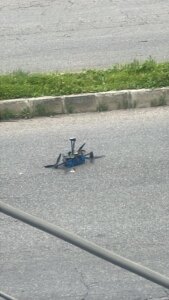
The Israeli Home Front announced the activation of sirens in Margaliot and Kiryat Shmona in the Upper Galilee to warn of missiles and drones. Sirens also sounded in the Golan settlements after a new missile attack from Lebanon.
Israeli Channel 12 reported the interception of a missile launched from Lebanon towards the Upper Galilee, while Israeli media reported the launch of long-range missiles towards Tel Aviv and its surroundings. Channel 14 confirmed that a “heavy missile attack” was launched from Lebanon, and that sirens sounded from northern Israel all the way to its center.
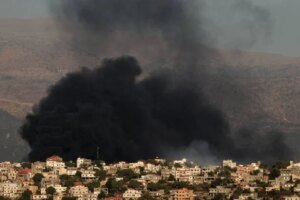
Channel 15 quoted sources as saying that Hezbollah fired 5 rockets towards northern Tel Aviv and 20 rockets towards the Galilee, while Israeli media reported a direct hit on a building in Kiryat Shmona as a result of the missile strike.
Israeli media reported that this operation is considered “the farthest in Hezbollah’s history,” after the range of some missiles exceeded 200 kilometers, while Channel 12 quoted military authorities as saying that “something like this has never happened before.”
Israeli media indicated that the party used Fateh 110 missiles launched from the Baalbek region in eastern Lebanon, which is a qualitative development in terms of range and accuracy. There were reports of long-range missiles being launched towards the Gaza Strip envelope, and it was claimed that they were being used for the first time in this context.
For its part, Hezbollah announced that it had targeted the Nahariya Basaliyah settlement with a missile as part of what it described as a “prior warning.”
In the same context, information reported that new heavy missile missiles were heading towards the occupied territories, coinciding with the sound of sirens in the vicinity of Tel Aviv and Netanya.
Estimates reported by Israeli media from the army indicate that Hezbollah may be able, starting tomorrow and for a week, to increase the intensity of its rocket fire, taking advantage of the weather conditions.
This development represents a qualitative shift in the course of the confrontation, after the missile range extended from the northern border range to a depth of more than 200 kilometers, to include the center and the vicinity of Tel Aviv, which indicates an expansion of the targeting scope and a change in the rules of engagement.
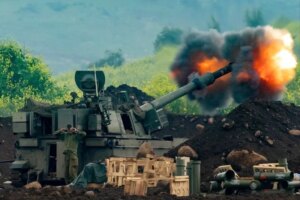
This escalation comes in light of an announced Israeli ground incursion into southern Lebanon with the participation of several brigades, and the continuation of air strikes on various areas, which increases fears that the confrontation will slide into a more comprehensive and complex phase in the coming days.