In an in-depth analysis published by “TIME” magazine, written by journalist Rebecca Schneid, a picture emerges of what could happen if Israel expands its ground operation in southern Lebanon, in light of the escalation of the conflict with Iran, and fears that the matter will develop into a long-term occupation.
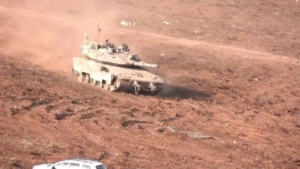
The report indicates that the Israeli army has already begun a “limited” ground offensive in new areas in southern Lebanon, with military expectations that these operations may take at least three weeks, as stated by the Israeli military spokesman. This step comes after an escalation that began on March 2, when Hezbollah fired missiles at Israel in response to the assassination of Iranian guide Ali Khamenei on February 28, in a joint operation between the United States and Israel.
According to researcher Faisal Itani, an assistant professor of Middle East politics at Georgetown University and a senior fellow at the Middle East Policy Council, the Israeli goal is to secure the northern front by removing the Hezbollah threat, either by occupying and disarming southern Lebanon, or by pushing it north, away from the settlements. He adds that this may be accompanied by the displacement of tens or hundreds of thousands of Lebanese, which will lead to internal pressure on the party and create tensions between sects.
For his part, Carnegie Center researcher Michael Young believes that Israel seeks to create a buffer zone that may reach a depth of 10 or 15 kilometers inside Lebanese territory, and perhaps control the areas south of the Litani River. But he explains that the plan goes beyond that, and also includes continuous monitoring of the areas north of the Litani using drones and surveillance systems, to prevent any attempts to reposition or launch attacks.
On the ground, Israeli forces began to advance in the town of Khiam, which is considered a strategic point close to the border, allowing expansion towards the Bekaa and cutting off supply lines from Hezbollah in the south. Young believes that Israel will later seek to expand towards the outskirts of the southern Bekaa and connect this axis to the Golan, to strengthen the military cordon around the party’s areas of influence.
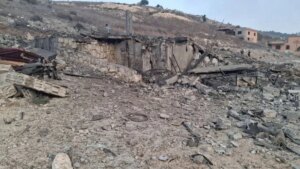
The report indicates that the first phase of the incursion depends on the gradual control of hills and high sites that provide an advantage in monitoring and targeting, in parallel with the continuation of intense aerial bombardment, and the use of armor and infantry units, within the framework of a multi-faceted operation.
From a humanitarian standpoint, the repercussions appear dire, as the fighting has so far led to the displacement of between 850,000 and one million Lebanese, with expectations of additional displacement of hundreds of thousands of residents, especially from areas south of the Litani, where they may be prevented from returning if the area is turned into a closed military zone or a “buffer zone” devoid of residents.
Politically, this scenario places the Lebanese state in front of a major dilemma. According to Young, Israel may retain the territories it controls and demand that Beirut disarm Hezbollah, which puts the Lebanese army before two difficult choices: either an internal confrontation that may reach the point of civil conflict, or accepting the continuation of the occupation and the imposition of a new field reality.
Despite Israel’s military superiority, the report confirms that Hezbollah is still capable of inflicting losses on advancing forces, especially if ground combat expands, as it relies on small groups and attrition warfare tactics. However, the military balance is clearly tilted in favor of Israel, while the decisive factor remains the political ability to bear human losses and continue the battle.
The report concludes by noting that the end of the war is still unclear, but the current path indicates the possibility of the emergence of a new reality in southern Lebanon, characterized by a buffer zone, widespread displacement, and increasing pressure on the Lebanese interior, with limited options between escalation or imposing a forced settlement.