Talal Eid – Central
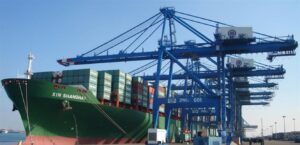
With every day that passes since the Israeli war on Hezbollah, the fear of a food crisis or fuel outage that takes the Lebanese back to the dark days they lived in the recent past grows. However, concerned economic sources confirm that there is no fear of any supply crisis as long as Lebanon’s ports are still receiving ships of various types and sizes.
In this context, the head of the Syndicate of Bakery Owners in Mount Lebanon, Antoine Seif, explains that the price of a bundle of bread will remain the same, that is, 70,000 liras after an increase of five thousand liras a few days ago, but he expects that the weight of the bundle will be reduced, not its price increased, next Monday, if the price of diesel continues to rise.
Saif enumerates the successive rises in diesel prices from $859 to $960, and currently it has exceeded a thousand dollars, as the rate of increase during the past two weeks reached 30 percent, which led to mills raising the prices of their operating costs, as well as the increases that occurred in the raw materials that go into making the loaf, so that it is no longer acceptable for the price of the bundle to remain the same. It was agreed to raise the price of the bundle by five thousand liras, or 70 thousand liras and its weight. The bundle is 840 grams.
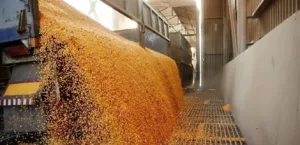
Saif acknowledges that the price of a loaf of bread is carefully studied because it constitutes the livelihood of citizens. He reassured that flour is sufficient for two and a half months and that there is no fear of any interruption of the loaf, especially since the Minister of Economy is aware of the importance of securing sufficient quantities of wheat and flour in difficult economic circumstances, and that there is no loaf crisis in the foreseeable future, especially since there is no rush to buy more than needed, after citizens became certain that there is no loaf crisis due to the measures taken by the Ministry. Economy in cooperation with mills and bakeries.
As for the head of the Syndicate of Gas Station Owners, George Al-Barakas, he says: The cars on the roads are fueled by gasoline, and the question is: What is the number of these cars? How much gasoline do stations distribute daily?
Al-Barakas answers: We know very well that the current conditions prevailing over Lebanon push the Lebanese citizen, who has previously experienced many crises, to fill his car’s tank with gasoline as soon as it drops, even by a few liters, to keep it “full.”
Brax points out that there are 1,800,000 cars in Lebanon. He says, “If we consider that each car contains 25 liters of gasoline as a general average for all cars, the gasoline stock in the tanks of Lebanese cars is approximately 45 million liters.” He points out that Lebanon’s average consumption is approximately 8 million liters per day, and the stock of gasoline in the Lebanese cars is sufficient for 6 days, which represents the load of a ship and a half.
Regarding foodstuffs, the relevant sources confirm that there are sufficient quantities for months and that the Lebanese food industries are capable of securing all local consumption requirements.
In this regard, the head of the Food Industries Syndicate, Ramez Bou Nader, told Al-Markazia: “The food industries in Lebanon are old and deeply rooted and have lived through very difficult circumstances in the past, and have learned how to overcome them. They were constantly taking precautions for the difficult and treacherous days because we are always surprised by compelling circumstances, wars, crises and various problems, so we have always maintained a stock of raw materials sufficient for at least four months, especially since it is not easy to obtain raw materials quickly, and this is why we always We are prepared for surprises with a good stock, and this is very important, as in the past we avoided the interruption of goods from the market, and this constituted a kind of food security for the Lebanese society as a whole, knowing that we are not a public sector or a state to undertake ensuring food security, but circumstances forced us to do so, and this is what we have always done.”