Recent polls have shown that a majority of Americans strongly oppose the US military attack against Iran, a position that contrasts sharply with the public support that has accompanied most previous US wars.
According to a report published in the New York Times by writers Lily Boyce and Ruth Egilnik, support for US strikes against Iran is still low in the early days of the war. This percentage ranged between 27% in a Reuters/Ipsos poll, and 50% in a Fox News poll.
The report shows that this percentage, even at its highest estimates, remains much lower than the levels of popular support witnessed in previous American wars at their beginning.
For example, a Gallup poll in 1941 revealed that 97% of Americans supported declaring war on Japan after the attack on Pearl Harbor. 92% of Americans also supported sending troops to Afghanistan after the attacks of September 11, 2001.
Even the 2003 Iraq War, which later became unpopular, initially enjoyed support from about 76% of Americans, according to a poll conducted the day after the start of military operations.
Experts believe that one of the reasons for the decline in support for the war on Iran is due to the absence of a political and media campaign to prepare for it. Sarah Maxey, a professor of international relations at Loyola University in Chicago, said that previous US administrations used to spend a long time justifying wars to public opinion before launching them.
She added that, before the Iraq war, for example, the United States witnessed a full year of public debate about the causes of the war and attempts at diplomacy before resorting to force.
The report also points to another factor: the increasing political polarization within the United States in recent decades, which has weakened what is known as the “rally around the flag” effect, which is the temporary rise in the popularity of presidents when wars break out.
Matthew Bohm, a professor of foreign policy at Harvard University, said that this effect has become much weaker today, especially in light of the sharp division between Republicans and Democrats.
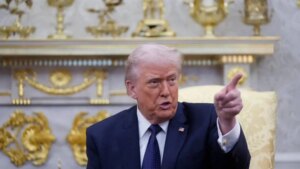
He added that part of Trump’s own electoral base preferred to avoid getting involved in foreign wars, which also explains the limited public support for the military operation.
The report concludes by saying that popular support for wars often declines as time passes and human casualties and costs of war increase, as happened in the Vietnam War and the Iraq War, where support declined dramatically years after the fighting began.