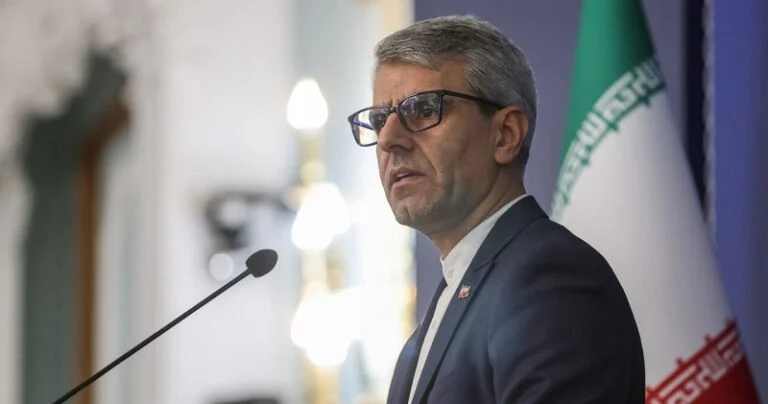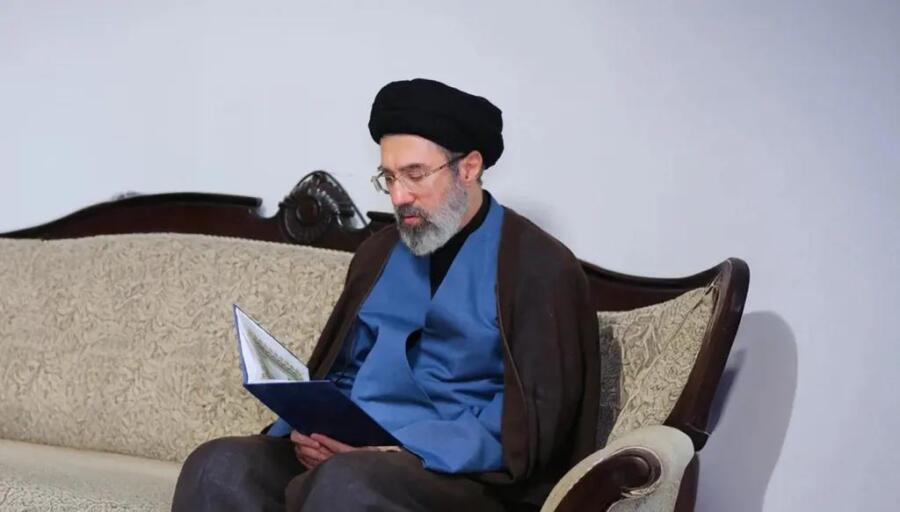
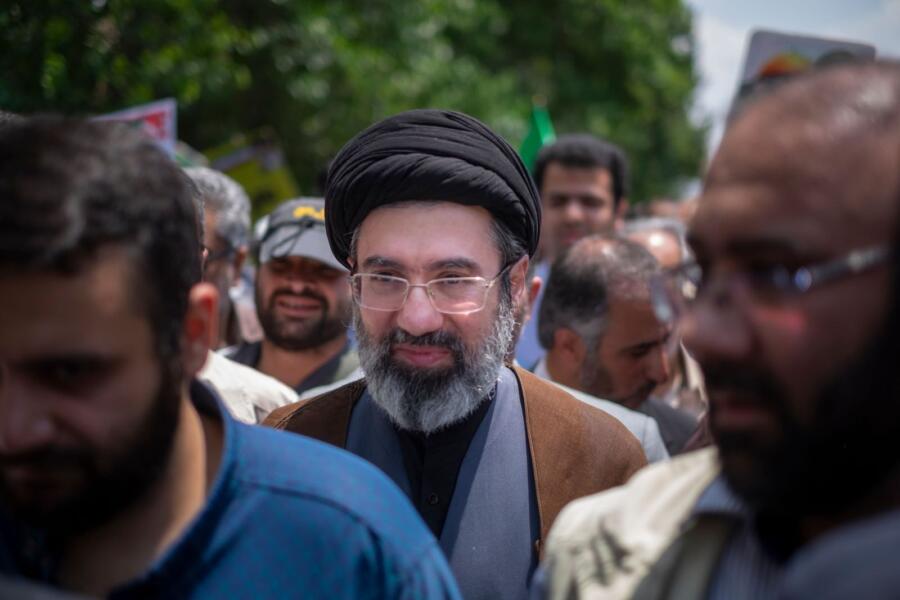
Mojtaba Khamenei is considered one of the most mysterious figures within the pyramid of power in Iran. Unlike his father, Mujtaba has largely maintained a limited presence in public life: he has not held any government position, is not known for giving public speeches or giving media interviews, and only a few photos and videos of him have been published.
The possibility of him succeeding his father raises controversy, as the ideology of the Islamic Republic is based on the fact that the selection of the supreme leader is based on religious standing and political leadership, and not through family inheritance.
Who is Mojtaba Khamenei?
Mojtaba Hosseini Khamenei was born on September 8, 1969 in the city of Mashhad in northeastern Iran. He is the second son of the Supreme Leader of the Islamic Republic, Ali Khamenei, and one of his six children.
Mojtaba grew up in a religious and political environment that was formed after the establishment of the Islamic Republic in 1979 following the overthrow of the monarchy. He belongs to a well-known religious family in Iran. He is the brother of the cleric Mustafa Khamenei, and one of his relatives is the cleric Hadi Khamenei. He also has family ties with prominent figures in the conservative movement, as he married Zahra Haddad, the daughter of the conservative politician Gholam Ali Haddad-Adel, the former speaker of the Iranian Parliament.
He received his secondary education at Al-Alawi religious school in Tehran. In 1999, he moved to the city of Qom, one of the most important centers of Shiite studies in the world, to continue his religious studies in the seminary. He did not wear religious garb until that stage, and his joining the seminary at the age of thirty is considered relatively late compared to the usual path for students of religious sciences who begin their studies at a younger age.
There he studied jurisprudence alongside the traditional religious sciences, but he did not emerge as a prominent religious authority within the seminary institution, and is still usually classified among the clerics at a mid-level rank, which may constitute a potential obstacle to his assuming the position of Supreme Leader.
Mojtaba Khamenei’s name became more widely known in the public sphere in 2005, when reformist politician Mehdi Karroubi accused him of interfering in Iran’s presidential elections in an open letter published in July of that year, an accusation that was not officially confirmed by the Iranian authorities.
In 2009, the British newspaper The Guardian described him as “an austere figure who is often seen as more stringent than his father.”
In the context of international pressure on the circle close to the Iranian leadership, the US Treasury Department included his name in 2019 on the list of sanctions imposed on figures that Washington said were linked to the Office of the Supreme Leader.
From the “War Generation”
Mojtaba Khamenei belongs to the generation that grew up during the first years of the Islamic Republic, a phase that coincided with the outbreak of the Iran-Iraq War (1980-1988), which constituted a pivotal experience in the formation of the political and security elites in Iran.
At the age of seventeen, he participated for short periods in military service during the war, according to what Iranian media reported. That war represented a pivotal experience for the revolutionary generation and established in the Iranian regime a state of deep suspicion towards the United States and the West, which supported Iraq during the conflict.
Various sources indicate that he participated in the fighting within the ranks of the “Basij Forces,” a popular paramilitary mobilization force linked to the Iranian Revolutionary Guard, which was established during the war to strengthen the Iranian front by attracting youth volunteers.
Mojtaba’s participation in the war is usually referred to in novels that deal with his biography as part of the experience of the generation that fought the war at an early age, an experience that the Iranian official discourse considers an important element in the formation of the country’s political and security leadership after the revolution.
This military background is used in some political estimates to explain his subsequent relations with security and military circles within the Iranian regime, including institutions linked to the Revolutionary Guard.
His limited presence in the media
Mojtaba does not give press interviews or appear regularly at public political events, and his appearance is often limited to religious occasions or limited official events, or through archival photos published by Iranian media.
His name sometimes appears in reports related to his activities within the seminary in the city of Qom, where he is said to teach advanced religious lessons, or on occasions related to supporting regional causes and attending solidarity events related to conflicts in the region.
This limited presence has contributed to consolidating his image as a figure who works away from the limelight, which reinforces the prevailing impression in many analyzes that he plays a behind-the-scenes role within the circles of power in Iran.
Mojtaba Khamenei’s name first entered the public spotlight during Iran’s 2005 presidential elections, which ended in the victory of conservative President Mahmoud Ahmadinejad. In an open letter to Ali Khamenei, reformist candidate Mehdi Karroubi accused Mojtaba of interfering in the elections through elements of the Iranian Revolutionary Guard and Basij forces, saying that these parties distributed money to religious groups to support Ahmadinejad’s victory.
His name is in succession discussions
In the context of the controversy over his political role, reformist figures accused Mojtaba Khamenei of interfering in political affairs.
Some observers believe that Mujtaba, if he assumes the position of Supreme Leader, may continue the hardline policies associated with his father’s era. Others also believe that his loss of family members in US-Israeli strikes may make him less inclined to respond to Western pressure.
However, he may face major challenges, most notably ensuring the continuity of the regime and convincing public opinion of his ability to lead the country out of its political and economic crises. His leadership experience remains largely untested, while the impression that the regime is moving toward family succession may intensify popular discontent.