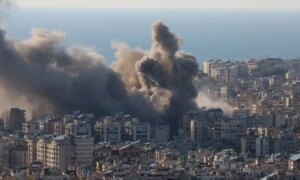
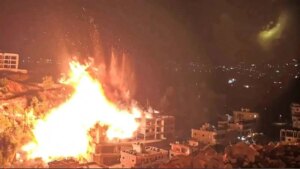
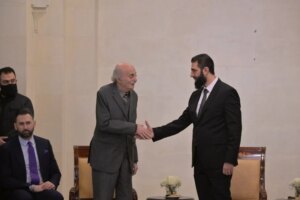
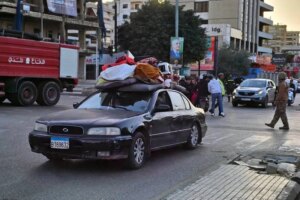
The Minister of Health made an inspection field tour of shelter centers for displaced people coming from areas exposed to Israeli aggression, and began his tour by visiting a shelter center in Furn El Chebbak supervised by Amel International Foundation, where he was briefed on the conditions of displaced families and the health services provided to them.
During the tour, the Minister stated that a wave of displacement had begun to appear in emergency departments in hospitals and shelter centers, and stressed that the Ministry of Health was following the situation on the field through tours to assess the needs for medicines and health services in various regions.
He stated that the Ministry began distributing medicines to health care centers spread across Lebanon, and pointed out that the aggression led to the closure of more than 40 health care centers as a result of targeting the areas in which they were located. However, about 300 care centers are still operating, including about 170 primary health care centers that continue to provide their services in cooperation with civil and national associations within the Ministry’s primary health care network.
The Minister confirmed that the Ministry of Health is distributing quotas of acute medicines and chronic disease medicines to these centers, in addition to supporting the health units associated with the shelter centers. He pointed out that mobile clinics have begun to spread to provide medical services wherever needed.
He noted that the need is great in light of the current conditions, but the preparations made by the Ministry in advance represent an important factor in facing the challenges. He said: “We are committed to our people and our people as a Ministry of Health and as a Lebanese state, and in cooperation with the Ministry of Social Affairs and various agencies, in the hope that these people will return to their homes with pride and dignity.”
The Minister called on citizens to be patient and wise, and thanked the host families and regions that received the displaced in various hospitality centers, considering that these positions embody the unity of the Lebanese and the spirit of national solidarity among them.
Regarding the availability of medicines, the Minister of Health reassured the Lebanese, stressing that the stock of medicines in Lebanon is sufficient for more than 3 months, and called not to panic. He explained that the Ministry is continuously coordinating with drug importers, pharmaceutical companies, and the Pharmacists Syndicate through periodic meetings to ensure continuity of supplies.
He also pointed out that medications for chronic diseases and cancer treatments are available, and explained that the Ministry implemented a plan to transfer patients who were receiving treatment in hospitals located in the targeted areas to hospitals in safer areas, including dialysis patients and cancer patients.
For his part, Kamel Muhanna, head of the International Amel Foundation, who accompanied the minister during the tour, explained that the shelter center in Furn El Chebbak works in cooperation with the Ministry of Health, indicating that this cooperation comes from the belief in the necessity of having an effective state and institutions that lead the response to crises.
Muhanna pointed out that the challenges are great in light of the current circumstances, as humanitarian and health needs are increasing while capabilities remain limited, which requires concerted local and international efforts to support Lebanon in this difficult stage.
He appealed to brothers and friends around the world to stand by Lebanon and support its people in facing the humanitarian repercussions of the war, stressing that international solidarity constitutes an essential factor in helping the Lebanese people overcome this ordeal.
He also stressed the importance of preserving national unity, recalling the scenes of solidarity that Lebanon witnessed during previous wars, and expressing his hope that this spirit would be renewed today. He added that the current stage requires the Lebanese to stand by each other in light of the difficult circumstances and limited capabilities.
Muhanna concluded by expressing his hope that the war will stop soon, and that the Lebanese will be able to quickly return to their towns and regions in peace.