The region is witnessing rapid developments, coinciding with the increase in attacks targeting sensitive facilities in the Kingdom of Saudi Arabia, amid growing fears that the scope of the conflict will expand and turn into a comprehensive regional confrontation.
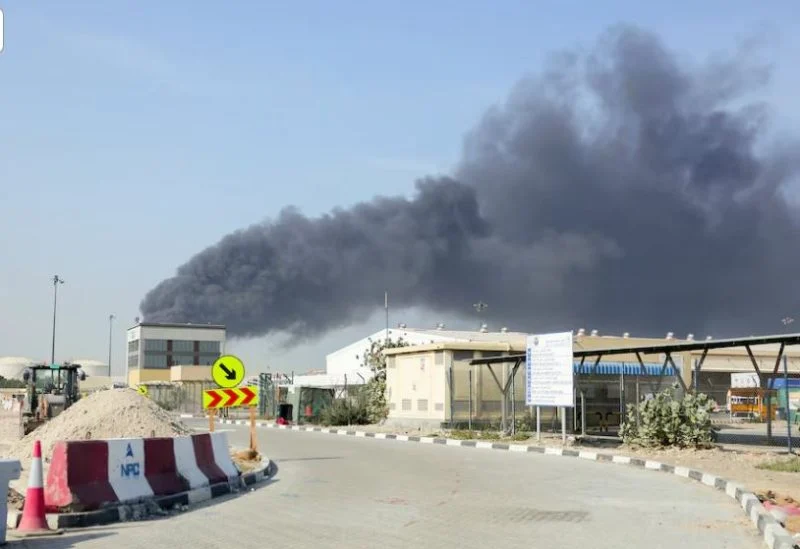
Agence France-Presse, citing a source close to the Saudi government, reported that the Kingdom may resort to a military response if Iran launches a “coordinated” attack on Saudi oil infrastructure, after work stopped at some Ras Tanura refinery facilities as a result of being targeted by drones.
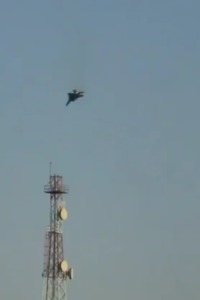
The agency reported that the Saudi army raised its state of alert to the highest degree following the attacks attributed to Iran, while Saudi defenses announced the interception of missiles targeting Prince Sultan Air Base near Riyadh.
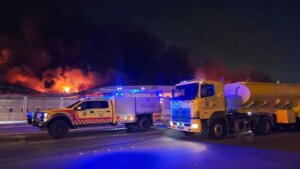
The official spokesman for the Saudi Ministry of Defense also confirmed the interception and destruction of two drones that attempted to attack the Ras Tanura refinery earlier today, and indicated that some fragments fell near civilian areas, leading to a limited fire that was controlled without causing casualties.
Journalist Muhammad Al-Hammadi believes that what is happening represents “a clear Iranian attempt to escalate and turn the confrontation into a regional war.” He explained that the targeting is no longer limited to military bases, but rather that most of the targets that have been subjected to attacks are civilian, vital, and economic targets, which directly affects the security of the countries concerned and indirectly on the global economy. He added that Tehran is trying to convey a message that the war will not remain within a narrow scope, warning that targeting the joints of the Gulf states threatens security and stability and cannot pass without a response, considering that any potential Saudi move will not be alone, but rather within the framework of broader coordination with regional and international parties, and that the Gulf states do not seek war, but they will not stand idly by when their sovereignty is targeted.
For his part, Dr. Amer Fakhoury, professor of international law at the American University in the Emirates, confirmed that the GCC countries have confirmed since the beginning of the escalation that they are not a party to the conflict, yet they have been subjected to attacks that targeted civilian targets. He pointed out that targeting airports or civilian facilities does not achieve any military gains and represents a violation of the rules of international law, pointing out that the affected countries have diplomatic and judicial paths available, including summoning ambassadors or declaring them persona non grata, and resorting to international courts to demand compensation, in addition to moving through the United Nations and international organizations to document violations. He stressed that the right to legitimate defense does not justify violating international norms and rules, warning that continued attacks may open the door to broader international alliances.
In light of talk about the interests of about 14 countries being directly affected, Fakhouri warned of the repercussions of any disruption of vital waterways in the region, most notably the Strait of Hormuz, as it is an international corridor subject to rules regulating freedom of navigation, indicating that any attack on it would not only harm the Gulf states, but would harm the entire global economy. Between the possibilities of a military response and legal and diplomatic moves, the region remains at a sensitive stage in which deterrence calculations are intertwined with efforts to contain the escalation, while the international community monitors the developments of events for fear of them sliding into a broader confrontation.