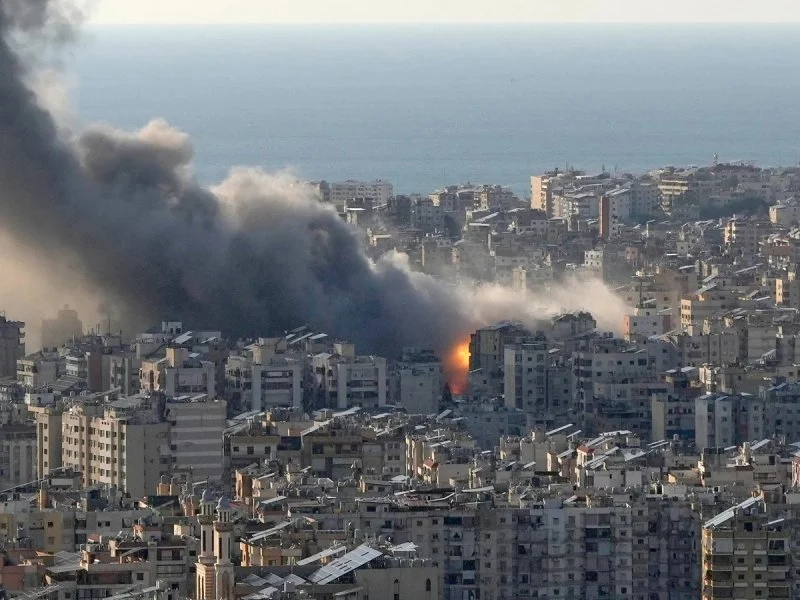
An Israeli source reported that Hezbollah’s participation in the ongoing fighting may prolong the war on the northern front, explaining that the confrontation with Iran may end while military operations continue in the north. This is what the Israeli Broadcasting Authority “Kan” stated in a report prepared by: Gili Cohen, Roi Kayes, and Elior Levy.
The report, quoting the Israeli source, indicated that Hezbollah’s intervention in the battle may affect its course and duration, suggesting that escalation in the north is likely to continue even after an agreement or truce is reached with Iran.
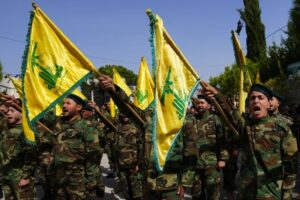
On the other hand, Kan quoted a Lebanese source from a party opposed to Hezbollah, saying that Operation “Assad’s Roar” represents an opportunity to end the Iranian regime and its arms in the region, led by Hezbollah. The source believed that the party’s Secretary-General, Naeem Qassem, “committed a big mistake” by joining the confrontation and launching rockets towards Israel.
The Lebanese source also added that Israel must limit its strikes to Hezbollah targets, and avoid targeting institutions or infrastructure belonging to the Lebanese state. He pointed out that the government in Beirut announced a clear position against the party and distinguished itself from it, calling for this position to be taken into account.
On the other hand, Hezbollah strongly attacked the Lebanese government’s statement, which demanded that the army “move by all means to ensure the disarmament of the organization.” However, the report also noted that there are voices within the Shiite community that oppose the party’s intervention in the current conflict, while the Amal Movement, Hezbollah’s main Shiite ally, has not publicly expressed its opposition to the government’s decision.
In a related context, Kan reported that the Israeli army assassinated the head of the military wing of the Islamic Jihad movement in the country, Adham Al-Othman, on the first day of the battle in Lebanon. A previous report by the Commission in November indicated that the “Hamas” and “Islamic Jihad” movements have worked over the past months to strengthen their military presence in Lebanon and Syria, in coordination with Hezbollah, in preparation for the possibility of their members joining the party’s “Al-Radwan” force when a large-scale war breaks out.
According to the report, the increasing presence of “Hamas” and “Islamic Jihad” in Lebanon comes in light of what Israeli sources describe as a relative decline in Hezbollah’s capabilities compared to previous periods, which reflects the complexity of the security situation on the northern front.