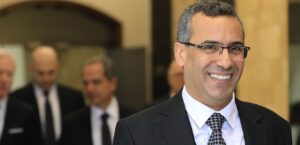
The Minister of Economy announced Amer Al-Bassat In an interview with the National News Agency, he said that there is a national consensus on the necessity of addressing the issue of salaries of public sector employees, especially the military, considering that the amount of sacrifices made by members of the military forces is not proportional to their current salaries, which requires urgent correction.
Al-Bassat explained that the cost of increasing salaries is estimated at about $800 million annually, which requires the state to secure additional revenues to avoid any negative repercussions. He warned that raising spending without corresponding resources would lead to aggravation of the deficit, increased inflation, and pressure on the lira.
He pointed out that the government has adopted two paths to secure revenues:
The first is to improve collection, combat tax and customs evasion, and reassess fines on marine and land properties and crushers, but these measures are not sufficient to cover the cost of the increases.
The second path was through imposing a tax on gasoline and raising the value-added tax (TVA).
Al-Bassat confirmed that the tax on gasoline will raise prices, but not to the levels at which they are traded, stressing that the Ministry of Economy is intensifying its oversight to prevent exploitation. He revealed that the Ministry has carried out about 1,500 inspection tours since the beginning of the year, during which less than 100 arrest reports were written, while field tours in which he personally participates continue.
He also pointed out holding meetings with unions of supermarkets, bakeries, and importers, and obtaining pledges to maintain current prices and not exploit the new taxes to raise prices randomly.
Regarding linking the salary increase to the approval of the TVA tax, he explained that the final decision rests with the House of Representatives, warning that approving increases without corresponding resources will inevitably lead to an additional deficit.
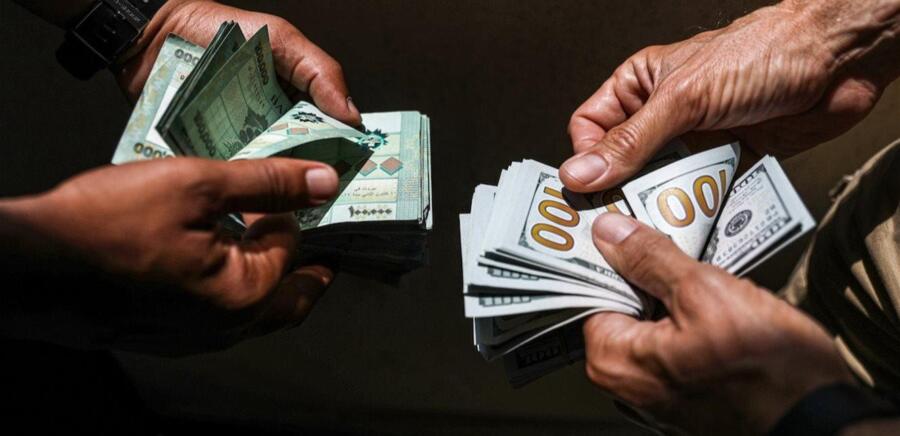
As for the proposals that called for reducing the dollar exchange rate to 60 thousand pounds, he stressed that determining the exchange rate is within the powers of the Bank of Lebanon, noting that setting a lower price requires the availability of sufficient dollar reserves, and wondering whether these dollars are available, especially since the reserves originally belong to depositors’ money.
Regarding the public sector restructuring file, Al-Bassat explained that the number of public sector employees is less than 9,000 employees, pointing out that there are large vacancies in some ministries, including the Ministry of Economy, at a rate of up to 93%. He stressed the importance of restructuring departments and merging some ministries, but without resorting to laying off employees, especially in the military sector, which is essential for national security.