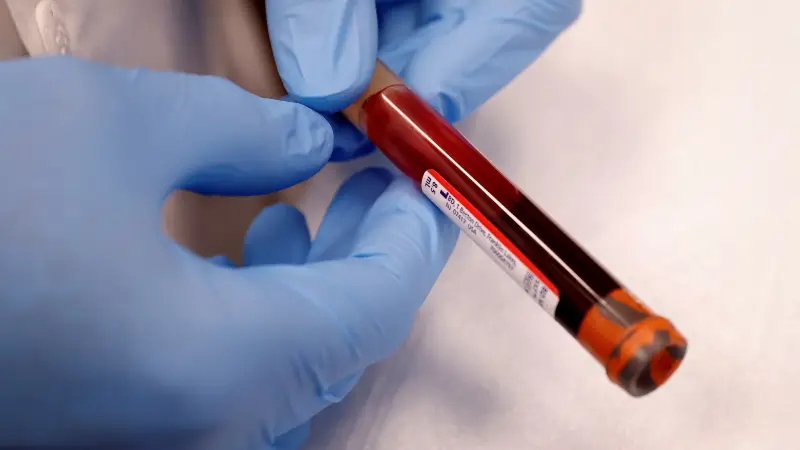
A promising discovery: A protein in the blood may contribute to the accuracy of diagnosing Alzheimer’s.
In recent research, Spanish scientists explored the effect of blood biomarkers, most notably the p-tau217 protein, on both the medical diagnosis of Alzheimer’s disease and the confidence of neurologists in their ability to make the correct diagnosis.
After following 200 patients over the age of 50 who showed signs of cognitive impairment, researchers found that performing a simple blood test to measure the level of phosphorylated tau protein (“p-tau217”) significantly improves the accuracy of the usual clinical diagnosis.
Relying on traditional clinical assessments alone, doctors were able to accurately diagnose Alzheimer’s disease in 75.5% of cases, but this percentage jumped to 94.5% when blood test results were added to the evaluation.
Phosphorylated tau protein, or “p-tau217,” is a protein found naturally in the brain, and contributes to maintaining the stability and health of nerve cells that transmit signals.
The problem is that this protein may become abnormally phosphorylated and aggregate to form tangles that impede communication between brain cells.
Over time, this damage can negatively impact brain function, leading to neurodegenerative conditions such as Alzheimer’s disease.
Although p-tau217 is not considered a direct cause of Alzheimer’s disease, high levels in the blood are now considered among the most accurate early warning signs of the disease.