The newspaper
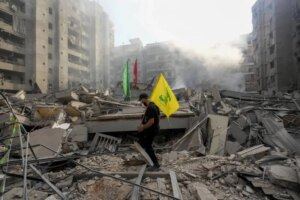
The Israeli strike, which targeted a number of Hezbollah officials in Baalbek, and led to the killing of 8 party officials, according to sources, is similar to the strike that was carried out against a number of leaders of the “Radwan Division” in the southern suburb of Beirut before the start of the expanded war on Lebanon, a week before the assassination of Hezbollah Secretary General Hassan Nasrallah.
The focus is on the Bekaa Valley this time as it is, for the Israelis, a strategic reservoir for Hezbollah’s precise and long-range missiles. A few days before that, Israeli leaks focused on the fact that the start of the war against Iran might start from Lebanon through expanded targeting of Hezbollah, which is what the Israelis are trying to put in the context of neutralizing the party from the possibility of engaging in any support operation in the event that the United States launches its attack on Iran.
The operation that took place the day before yesterday evening was accompanied by international and diplomatic messages that Lebanon received warning it against engaging in any confrontation, with a warning against Israel resorting to carrying out assassination operations against military officials in the party, and even against some political officials, with the aim of not only changing the military realities, but changing the political realities as a whole. A Hezbollah source told a foreign agency, preferring to remain anonymous, that eight of its members were killed in the raids, and that they were holding a meeting while they were being targeted, while the party mourned the leader in its ranks, Hussein Muhammad Yaghi. The Israeli army, for its part, announced in a statement that it targeted members belonging to the Hezbollah missile unit, in three different headquarters in the Baalbek area. He stated that they had been working “recently to speed up the stages of armament and readiness, and they planned to carry out launch operations towards Israeli territory,” accusing the party’s missile unit of “planning to launch attacks of this kind towards Israel.”
In this context, Western diplomatic sources reveal that the decision to strike Iran against Iran has been taken, but the date or size of this strike is not known. The sources report that the aim of the strike is to change all the facts and balances in the region, which will also affect the political track in Lebanon, pushing it further to accelerate the withdrawal of the party’s weapons. According to Western sources, there are two trends in Hezbollah: “One trend wants to avoid involvement in the war and neutralize the party and Lebanon from it and its repercussions, and another trend, especially among figures in the Jihadi Council, believes that it is necessary to enter the war forcefully, and not remain silent about all Israeli strikes, and that the time has come to take revenge and respond to all previous strikes.” The sources reveal that the Israelis either want to take pre-emptive action against the party, or if they detect any of the party’s movements, they will work to carry out a broad and very strong strike on many of the party’s power centers and sites, in addition to carrying out assassination operations against key jihadist and military figures. According to what was leaked from diplomatic sources to Lebanese officials, Israel has about 1,200 targets in Lebanon that it will be ready to strike if Hezbollah gets involved in the war. The entry of Iran’s allies into the war will turn attention towards Lebanon, Iraq and Yemen. This pushes the Lebanese arena into a state of anticipation and waiting, and many questions are raised about what might happen, amid fears that Israel might resort to carrying out large-scale military operations targeting areas in the Bekaa, especially since the Bekaa is the main reservoir for the party’s long-range and accurate missiles.