The Hamas movement stressed that any political movement or arrangements being considered regarding the Gaza Strip and the future of the Palestinian people must begin with a comprehensive cessation of aggression, lifting the imposed siege, and guaranteeing legitimate national rights, first and foremost the right to freedom and self-determination.
This position came in a press statement issued by the movement, in response to the holding of the “Peace Council” session for the Gaza Strip, yesterday, Thursday, in the United States of America, where the movement confirmed that holding this session in light of the continuation of what it described as the crimes of the Israeli army and its ongoing violations of the ceasefire agreement, requires the international community and the participating parties to take practical and concrete steps to oblige Israel to stop its aggression.
The movement also called for the opening of crossings, the entry of humanitarian aid without restrictions, and the immediate start of the reconstruction process, stressing the need for international parties and mediators to assume their full responsibilities in ensuring the implementation of what has been agreed upon, and preventing obstruction of humanitarian and political entitlements.
It called on Hamas to work seriously to establish a permanent ceasefire, considering that any real international effort to achieve stability in the Gaza Strip must depend on addressing the root causes of the problem, which are the occupation, ending its policies, and enabling the Palestinian people to obtain their full and undiminished rights.
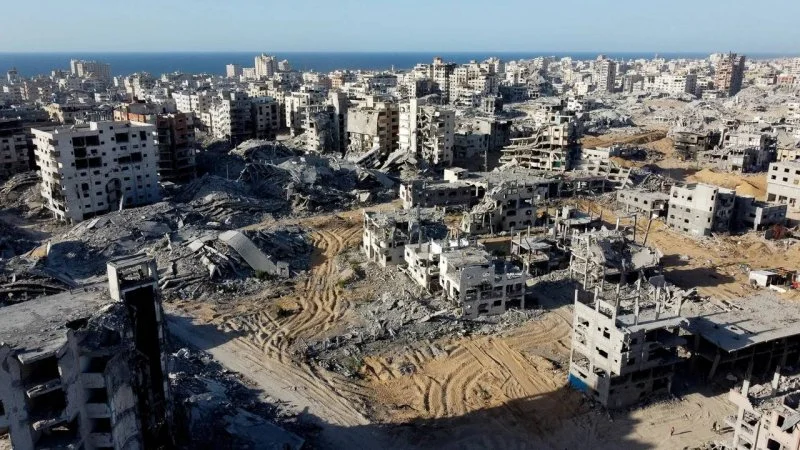
In a related context, on Thursday, US President Donald Trump held the first meeting of the “Peace Council,” with the participation of representatives from more than 40 countries, in addition to observers from 12 other countries, where the discussion focused on the reconstruction of the Gaza Strip damaged by the war, and the possibility of forming an international stabilization force.
Trump announced that the United States would donate $10 billion to the “Peace Council” that he chairs, without specifying how this money would be spent, noting that nine member states of the Council also pledged to provide $7 billion to support relief efforts in Gaza.
This development comes in light of the continuing humanitarian crisis in the Gaza Strip, amid warnings from the United Nations of deteriorating living and health conditions, and the faltering path to a sustainable ceasefire. This international political move coincides with increasing pressure to launch the reconstruction process, in the face of deep disagreements about the future of the sector and the expected security and political arrangements.