The Iranian leadership is facing a period considered among the most dangerous in the history of the Islamic Republic, in light of a severe economic crisis, escalating popular anger, and a decline in regional influence, in addition to continuing American threats to resort to the military option.
According to a report issued by Bloomberg, these accumulated pressures place Tehran in a very sensitive strategic position, amid regional fears that any major internal unrest could lead to a new wave of instability in the Middle East.
The report, which was based on a new documentary broadcast by the network, explains that the roots of the current crisis go back to decades of Western sanctions, in addition to internal economic policies described as failure. The main source of state revenues – oil exports – was greatly affected, forcing Tehran to sell its oil at reduced prices, while the collapse of the local currency last December led to a sharp decline in citizens’ purchasing power and high inflation rates.
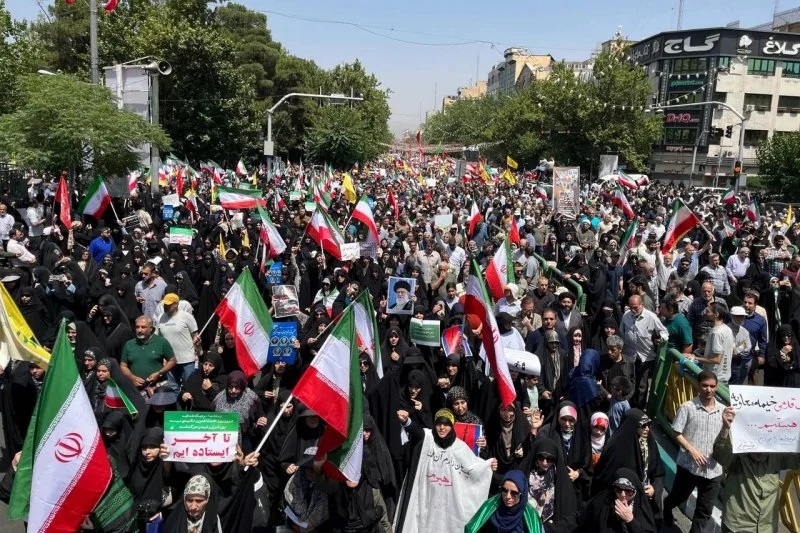
Recent weeks witnessed a widespread wave of protests due to rising prices and deteriorating living conditions, which ended in a violent crackdown by security forces, which, according to the report, resulted in thousands of deaths. US President Donald Trump has cited internal repression, as well as Iran’s nuclear program, as one possible justification for any additional military action against Tehran.
In contrast, the Iranian government holds the West and sanctions responsible, but analysts also point to widespread corruption and internal mismanagement. With the withdrawal of foreign companies from the Iranian market as a result of the sanctions, the influence of the Revolutionary Guard expanded within the main economic sectors, which strengthened the control of networks linked to it over the joints of the economy and enabled them to achieve significant gains.
Regionally, Iran’s position has declined significantly. Since the Hamas attack in 2023 and the war in Gaza, the movement’s influence has been greatly damaged, and operations targeting prominent Hezbollah leaders in Lebanon have affected its balance. In Syria, actual power is in the hands of parties that cannot be described as close to Tehran. Consequently, Iran finds itself today with a limited ability to influence compared to what it was when it took the lead in what was known as the “axis of resistance.”
The report indicates that the combination of severe economic pressures, increasing regional isolation, the American military threat, and escalating popular tension puts the Iranian leadership facing unprecedented challenges. Many capitals in the Middle East are watching developments with concern, fearing that any internal rift in Tehran could lead to broader destabilization in the region.
In light of these facts, Iran appears to be at a difficult crossroads, as internal crises converge with regional transformations and international pressures, at a moment described as among the most sensitive since the establishment of the Islamic Republic in 1979.