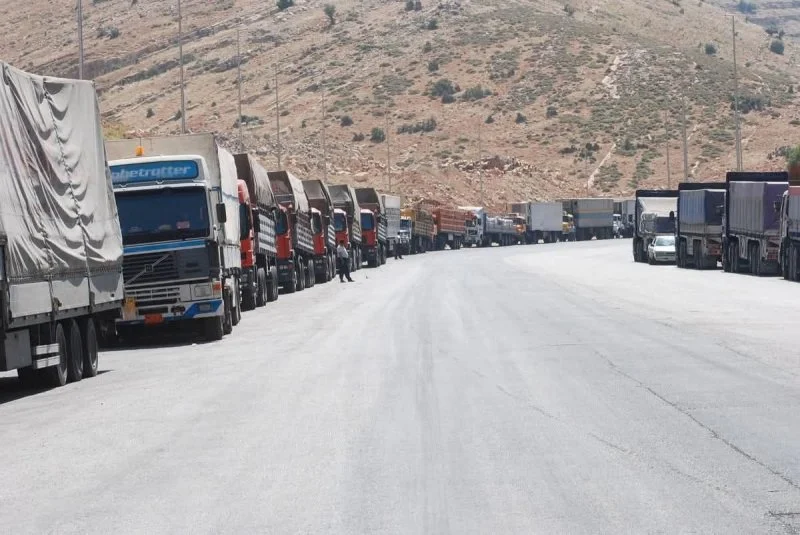
In a statement issued by him, the head of the federations and unions of the land transport sector in Lebanon, Bassam Tlais, called on the unions concerned with the external transport, refrigerators and transit sectors, in addition to all affected parties, to attend a meeting and a press conference. The conference is scheduled to be held at exactly two o’clock in the afternoon tomorrow, Tuesday, February 10, 2026, on the Lebanese-Syrian border in the Masnaa area. The goal of this conference is to declare a unified position regarding the recent Syrian measures targeting Lebanese trucks.
Tlais stressed that this call comes in response to the decision of the Syrian authorities, which included measures that directly affected Lebanese trucks, which led to negative repercussions on the transport sector and the national economy in all its agricultural, industrial and commercial aspects. He pointed out that despite three days having passed since the decision was issued, no positive signs have emerged from the Syrian side.
He added that the conference will represent an opportunity to demand that the Lebanese government take action and take the necessary measures to protect the public interest and preserve the future of thousands of families who depend on this sector, including public drivers and owners of trucks and refrigerators, in light of the increasing losses and the disruption of export and transit traffic.
It should be noted that in the past few days, the Syrian authorities have imposed new regulatory measures affecting the movement of Lebanese trucks heading to Syrian territory, which has led to a partial slowdown in land transport movement and an increase in export costs, especially for agricultural products and perishable goods. This decision sparked widespread dissatisfaction in the Lebanese transportation sector, with official and union demands for the necessity of finding a quick solution that guarantees reciprocity and the continuation of trade exchange between the two countries, especially in light of the difficult economic conditions facing Lebanon.