“Lebanon Debate”
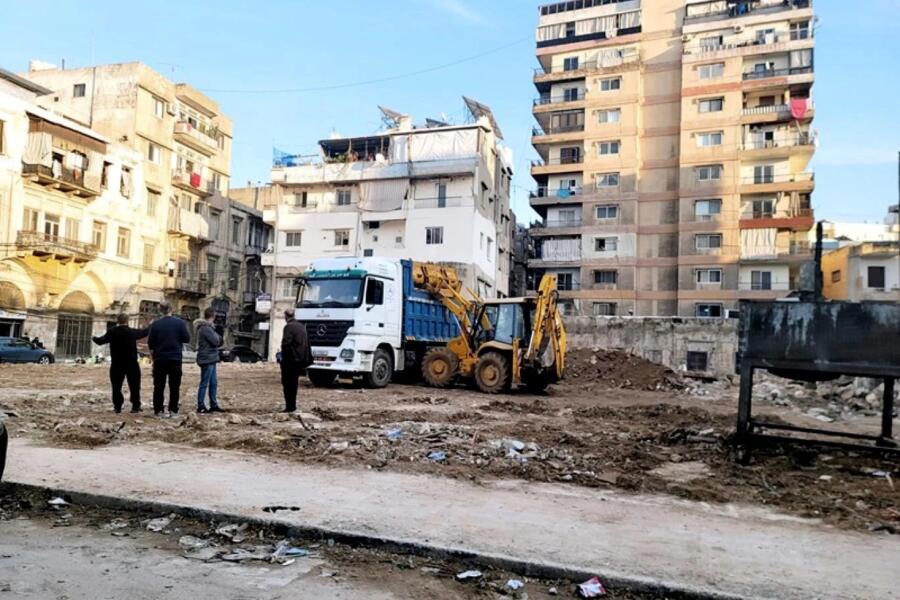
After the tragedy of the collapse of a residential building consisting of two sections, each containing six floors, in the Bab al-Tabbaneh neighborhood in the city of Tripoli, which led, as a final toll, to the death of 14 people and the injury of 8 others, the tragedy of buildings on the verge of collapse has returned to impose itself harshly on the Lebanese reality, as an additional symbol of the collapse of the system of protection and responsibility in a country exhausted by wars, crises, and chronic neglect.
In this context, the head of the Lebanese Real Estate Authority, lawyer Indira Al-Zuhairi, offered her deepest condolences to the families of the Tripoli victims, expressing her deep regret for what happened, and stressing that this disaster is not an isolated event or a spur of the moment, but rather a natural result of the accumulation of long years of institutional, municipal and administrative neglect, and wrong policies that were left without any serious treatment.
Al-Zuhairi confirmed, in an interview with Lebanon Debate, that the absence of oversight and physical and technical inspection of buildings, and the failure to take warning reports seriously, in addition to the absence of any actual emergency plan to address the risks of collapses, constituted fertile ground for the recurrence of such tragedies. She considered that the system of neglect begins with the freezing of laws, especially the old rental laws, through the indifference of politicians and officials, all the way to leaving the fate of people hostage to fate.
She stressed that responsibility does not fall on one party, considering that municipalities have a fundamental role that has not been implemented, as they have not initiated periodic and systematic inspections of buildings, despite the possibility of carrying out serious surveys and classifying buildings according to their degree of danger, and determining what can be restored or reinforced or what requires evacuation or demolition. She pointed out that many reports had warned of buildings in danger of collapsing, but these warnings were shelved without any practical steps, despite the knowledge of the concerned authorities that a large number of these buildings were old or heritage, or had been exposed to serious construction violations as a result of negligence and the absence of oversight and accountability.
Al-Zuhairi warned that the risk of building collapse would not remain limited to the city of Tripoli. Rather, Lebanon is likely to witness a similar scene in several different regions, in light of the deteriorating structural reality. Returning to Tripoli and the north, she pointed out that entire neighborhoods and markets have turned into hotbeds of poverty and danger, as a result of the absence of oversight and housing plans, and the freezing of laws, especially rental laws, for political and populist reasons, stressing that people’s safety is a basic right that should not be turned into material for political investment.
She added that warnings about the danger of building collapse were issued more than ten years ago by specialists and engineering bodies, but they were not met with any actual response. She pointed out that the majority of buildings in Lebanon are more than 80 years old, while the lifespan of concrete, according to experts, does not exceed 50 years, and with each year it loses about 5% of its quality, which increases its fragility, especially in light of the lack of maintenance, and the succession of wars and natural disasters, all the way to earthquakes.
She explained that many popular neighborhoods were originally established without taking into account public safety standards, and on lands unsuitable for construction, in addition to encroachments on sea and river properties, which caused serious damage to the foundations of buildings.
In this context, she pointed to areas and neighborhoods in Tripoli that have proven to be structurally dangerous, most notably: Bab al-Tabbaneh, where the structural and structural situation is extremely dangerous, al-Qubba, al-Zahriyah, Bab al-Raml, the banks of the Abu Ali River, the ancient Saraya, Nuns Street, Jabal Mohsen, Dahr al-Mughr, the old heritage market known as the “Belt of Misery,” in addition to the Tanak area.
Al-Zuhairi strongly criticized the prevailing approach to dealing with disasters, considering that action only occurs after a tragedy occurs, and stressed that what happened must constitute a real turning point in how to deal with the file of buildings in danger of collapsing, by declaring a state of emergency and dealing with this file without any delay, in order to avoid exposing people’s lives to additional risks.
She pointed out that there are no accurate official statistics on the number of buildings at risk of collapse in Lebanon, and that what is available is mostly due to individual initiatives or the efforts of civil authorities, specialists and associations. It confirmed the presence of hundreds of dangerous buildings in several cities, including Tripoli, Beirut, Sidon and Tyre, based on official partial surveys. She expressed her wish that a mechanism similar to the one implemented after the Beirut Port explosion had been adopted, when the Lebanese Army, in cooperation with the Engineers Unions in Beirut and Tripoli, took inventory of buildings and classified them according to degree of danger, even though that survey was partial and limited to the vicinity of the port.
She pointed out that in Tripoli alone, the number of buildings at risk of collapse is estimated at about 4,000 buildings, including hundreds in an advanced stage of danger, and a large number of them are inhabited.
She stressed that what is needed today are immediate and decisive measures, at the forefront of which is the organized evacuation of dangerous buildings and providing temporary housing alternatives for those affected, suggesting the adoption of prefabricated homes as a safe and less expensive solution, in addition to seeking to secure international support through donations. It also called for the rapid formation of independent engineering committees, the activation of existing laws, and the establishment of a national emergency fund to restore buildings that are about to collapse.
Al-Zuhairi concluded by emphasizing that protecting citizens is a duty that the state cannot evade, calling for enhancing awareness and spreading a culture of public safety, updating laws, providing incentives for the maintenance of heritage buildings, and supporting old owners who have been harmed for many years by old rent laws and low allowances, considering that these laws were among the main causes of the deterioration of buildings. It also stressed the need to establish shelter centers that guarantee the security and safety of citizens in emergencies and disasters.