Energy security is a fundamental pillar of global economic stability, as production, trade and industry are closely linked to a constant flow of oil and gas. At the heart of this sensitive system, the Strait of Hormuz is located at a pivotal location within the geopolitical conflict between Iran, the United States, and their allies, where political tensions intersect with vital economic interests. As the confrontation intensifies, fears are rising that this narrow waterway will turn into a tool for strategic pressure and blackmail.
These tensions have directly affected the behavior of global shipping companies, as companies operating giant oil tankers took preventive measures by increasing the speed of their ships crossing the strait to unusual levels, reaching in some cases about 17 nautical knots, compared to the normal rate, which usually does not exceed 13 knots for fully loaded tankers. This measure comes in light of escalating security concerns, especially after Iran announced the conduct of military exercises with live ammunition in the region, which increased the concern of insurance and international shipping companies about the potential risks that threaten the safety of navigation.
In light of these circumstances, there is renewed talk about the importance of the Strait of Hormuz as one of the most dangerous choke points in the world, and about the repercussions of any military or political escalation on the stability of energy markets and the global economy in general.
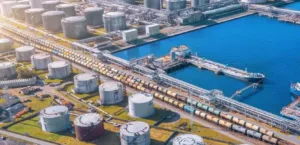
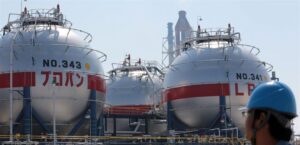
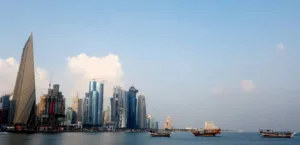
The Strait of Hormuz is considered a vital artery for the global economy. According to international maritime transport specialist Dr. Wissam Naji, it is “a narrow shipping lane in the Arabian Gulf region, and it constitutes the main outlet for its countries’ oil to the outside world, and it is rightly called the lifeline of the industrial world.” It is the only waterway linking oil producers in the Arabian Gulf to global markets in Asia, Europe and North America. From a geopolitical standpoint, the importance of the Strait is highlighted by its strategic location that links the Arabian Gulf and the Gulf of Oman, and constitutes a bottleneck at the entrance to the Gulf. It is also considered the only maritime outlet for some of the countries bordering it, which gives it extremely sensitive political and security weight. This vital sea corridor represents about a third of the world’s seaborne oil trade, and is a major artery for exporting oil from the Gulf states, especially Saudi Arabia, the Emirates, Kuwait, Iraq and Iran, to Asian, European and American markets. Between 20 and 21 million barrels of crude oil and derivatives pass through it daily, equivalent to about 20% to 25% of total global oil consumption, in addition to about 20% of global liquefied natural gas trade, most of which is from Qatar, with more than 80% of these supplies heading to Asian markets, especially China, India, Japan and South Korea.
In this context, the Supreme Commander of the Iranian Revolutionary Guard, Brigadier General Ali Reza Tangsiri, stated that Iran “is capable of disrupting traffic in the strait, but it chooses not to do so.” Iran uses the threat of closing the Strait as a strategic deterrent tool in the face of economic sanctions, military pressure, and potential threats to strike its nuclear facilities. Its message is summed up in a clear equation: “If we cannot export our oil, others will not be able to export theirs.”
Naji says: “Historically, Iran has not closed the strait completely and continuously. During the tanker war in the 1980s during the Iran-Iraq war, oil tankers were subjected to mutual attacks, which led to international intervention to protect navigation, but the passage remained open from a technical and practical standpoint.”
As for the tools that Iran possesses to exert pressure across the Strait, according to Naji, they are many and varied. The Iranian coast overlooks the strait for a distance of more than 100 nautical miles, and Tehran possesses a large arsenal of naval missiles, drones, speedboats, and defensive and air systems, which enable it to threaten passing ships. Limited and deliberate attacks can also temporarily disrupt shipping traffic, in addition to its electronic warfare capabilities that may target navigation and positioning systems (GPS), which automatically prompts shipping companies to stop traffic as a result of the high risks and insurance costs.
In this context, Goldman Sachs warned of risks threatening global energy supplies in light of mounting concerns about the possibility of disturbances in the Strait of Hormuz, which could lead to sharp rises in the prices of oil and liquefied natural gas. Any serious tension in the region is immediately reflected in prices through what is known as the “risk premium.” In the event of an actual closure, analysts expect a historic jump that may exceed $120 to $150 per barrel, and may reach catastrophic levels if the outage is prolonged.
To confront such scenarios, Naji points out that major countries rely on strategic reserves that are sufficient for several months, and they also seek to diversify energy sources. However, some countries, such as Lebanon, suffer, as Maggi says, from a severe weakness in their reserves, as their minimum ranges between 15 days and two months, according to the following data:
Food stocks last between 3 and 4 months.
The food industry sector is able to continue production for about three months within current capabilities.
The stock of live beef is sufficient for about 3 months.
The mills’ wheat stock is sufficient to produce bread for one and a half to two months.
The poultry sector is able to continue production for two to two and a half months, depending on feed stocks.
The stock of gasoline and diesel is sufficient for between 25 days and a month.
Home gas stock is sufficient for two months.
On the other hand, some Gulf countries have partial alternatives that reduce the effects of closing the strait. According to Naji, Saudi Arabia depends on the “East-West” pipeline extending to the port of Yanbu on the Red Sea, with a transport capacity ranging between 5 and 7 million barrels per day. As for the UAE, it enjoys a relatively better situation thanks to the Abu Dhabi-Fujairah pipeline, which began operating in 2012 with a capacity of 1.5 million barrels per day. The port of Fujairah is located on the Gulf of Oman outside the Arabian Gulf, which allows about 75% of UAE production to be exported when necessary. As for Iraq, it relies partly on exports through the Turkish port of Ceyhan, but it is not sufficient to compensate for the loss of the strait.
However, Naji says, these alternatives remain limited and cover only a small portion of the quantities that pass through Hormuz, which means that any closure will cause a large global deficit that will be difficult to compensate quickly.
In addition, China is the largest importer of oil through the Strait, importing about 5 million barrels per day. Therefore, the stability of Hormuz, Naji asserts, constitutes a national security issue for Beijing. Despite its good relations with Tehran, any closure would cause severe damage to the Chinese economy, making China exert indirect pressure to prevent Iran from taking this step.
At the international level, closing the Strait is a red line for the United States and the major powers. Any actual attempt to close it, according to Naji’s reading, will likely lead to a direct military confrontation led by international coalitions to secure navigation, because the global economy cannot tolerate the interruption of this vital artery for more than a few days.
Experts believe that closing the Strait of Hormuz for Iran is more of a deterrent tool than a practical option. Tehran may be able to temporarily disable it, but the majority trusts the ability of the United States and its allies to quickly reopen it using military and technical means.
Accordingly, the Strait is considered a double-edged sword. Naji says: It is very effective as a tool of threat and political blackmail, but if it is actually used as a means of comprehensive closure, it will lead to economic suicide for Iran itself, which depends on the Strait to export its oil and import its goods. It will also turn its allies, led by China, into adversaries, and calls for a decisive international response.
In light of this, it is clear that Arab and Asian countries and the entire world will suffer huge losses in the event of any possible closure of the Strait of Hormuz.
The bottom line is that everyone loses from closing the Strait of Hormuz, whether Iran, the Gulf states, the major powers, or the global economy. It is likely, according to realistic estimates, that this closure will not actually happen, in order to preserve the fragile stability of the global economy and avoid the region sliding into a comprehensive confrontation with unprecedented costs.