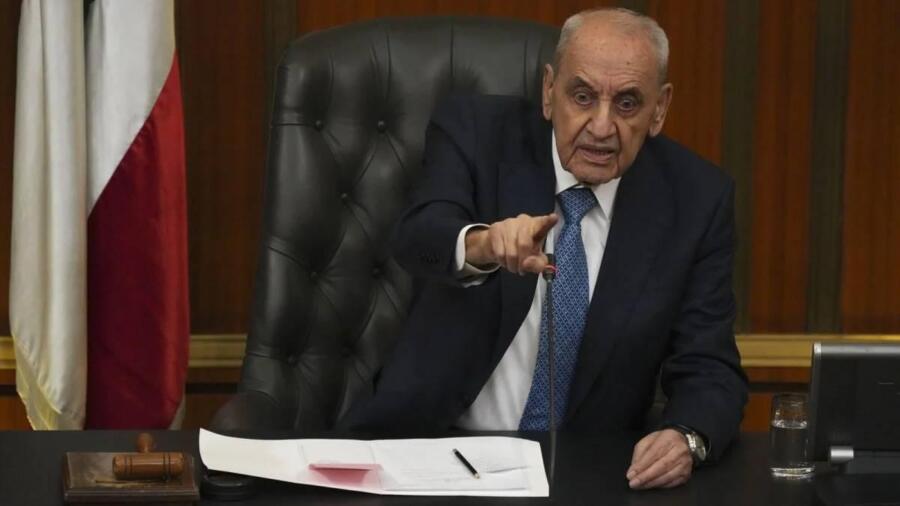
Parliament Speaker Nabih Berri resolved the ongoing controversy over the fate of the parliamentary elections, confirming, in an interview with Asas Media, that the elections will be held on time next May, without any postponement or extension, and in accordance with the effective electoral law.
Berri asserted that no amendment would be made to the law between May and July, considering that everything proposed outside this framework is no longer on the table.
Berri indicated that, weeks ago, he had expressed initial openness to the idea of a limited technical postponement not exceeding two months, but he later retracted it after it did not receive the desired response. He pointed out that he had previously presented a settlement stipulating the cancellation of the six seats allocated to expatriate representatives in exchange for voting for those deployed at home, in addition to accepting a short technical postponement to facilitate the electoral process, but this proposal was rejected, which prompted him to withdraw it permanently.
The Speaker of the Council confirmed that he would not call for any parliamentary session to amend the electoral law, stressing that what is required is to implement the existing law as it is, even if the elections were conducted according to an imperfect law. He said: “We are going to the elections on time and according to the applicable law, and this is the only solution.”
Regarding the government’s role, Berri explained, in his interview with Asas Media, that the law does not impose any direct action on it, but rather practical steps are limited to the Ministers of Interior and Foreign Affairs, through some administrative procedures. In his opinion, the opening of nominations constitutes the actual indicator of serious entry into the electoral process.
Berri stopped at the approach to the electoral law, considering that the political decision to hold elections takes precedence over some of the formalities contained in the legal text, based on international constitutional jurisprudence that confirms that formalities should not obstruct democratic entitlements. He gave an example of the electronic magnetic card, considering that the inability to implement it will not prevent the holding of elections and will not constitute a reason to stop them.
Berri concluded by stressing that the elections, once they are held, immediately gain their full legitimacy because they express the popular will, recalling the 1992 elections, which were accompanied by widespread skepticism before they took place, but as soon as they ended, the elected parliament gained its legitimacy. He also expressed his regret that the political and media debate is preoccupied with the elections, at a time when they “forget about the daily Israeli attacks on the south.”