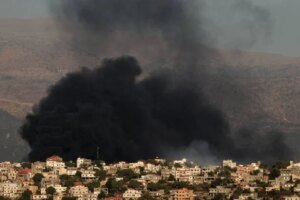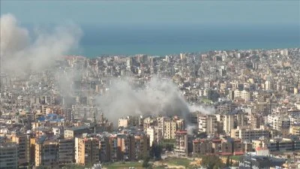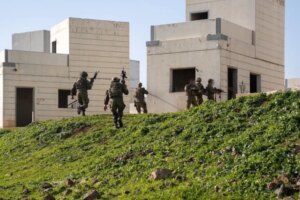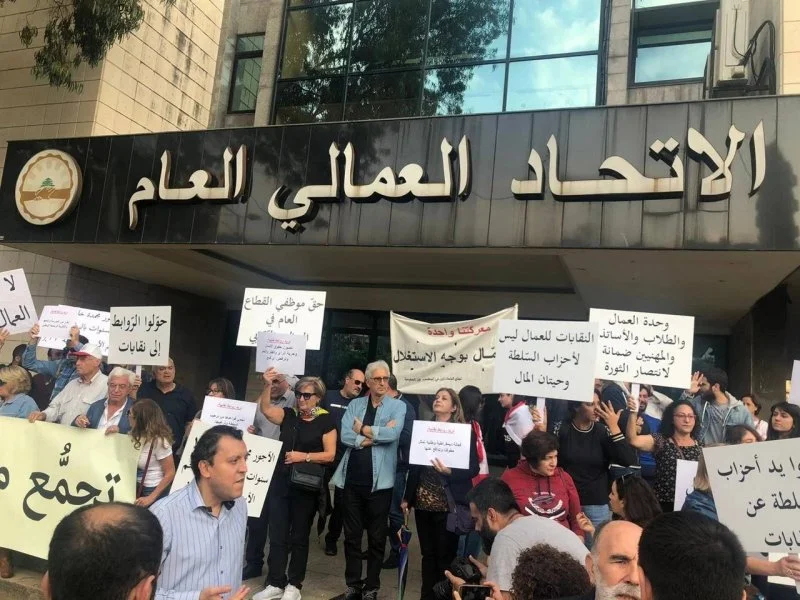
In a statement issued by it, the Executive Office of the “National Federation of Trade Unions and Employees in Lebanon” explained that it held a meeting chaired by its president, Castro Abdullah. The meeting came in light of the worsening Israeli attacks on southern Lebanon, and the continuation of economic and social policies that exacerbate poverty and marginalization in the country, and put workers and employees in direct confrontation with hunger, unemployment, and lack of social security.
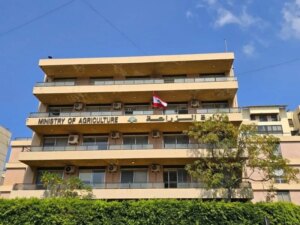
The Union expressed its strong condemnation of the ongoing Israeli attacks, and demanded reconstruction, compensation, and protection for returnees. He also denounced the crimes committed against civilians, including the use of toxic pesticides, considering this a continuation of the series of environmental and agricultural attacks, after burning lands with white phosphorus. The Union believed that these practices target people, land, and sources of livelihood, undermine food security, and destroy the livelihoods of thousands of working and farmer families.
The Union confirmed that what is happening is a “comprehensive war on life and work,” and called for launching an urgent plan for reconstruction with fair and transparent financing, compensating the affected farmers, workers, and families for material and environmental losses, guaranteeing the right of safe and dignified return of the people to their villages, and rejecting any form of forced displacement or imposing a fait accompli by force.
Regarding economic affairs, the Union considered that the recently approved budget is not a rescue budget, but rather a budget subject to the dictates of the International Monetary Fund, which was implemented at the expense of workers, employees, and small earners. He pointed out that it was based on burdening the poor and middle groups with indirect taxes, undermining public services and social rights, and ignoring real tax justice and holding banks and major beneficiaries of the collapse accountable. He considered it a class budget par excellence, “turning the crisis into an opportunity to plunder the remaining incomes of workers, and legalizing poverty and hunger under the title of ‘reform’.”
The Union reiterated its emphasis that correcting wages in the private sector is no longer just a demand, but rather an existential necessity, calling for raising the minimum wage to more than $1,000 as an actual minimum for living, linking wages to the cost of living index, approving a sliding scale for wages, correcting the minimum and approving increases in salary brackets, protecting wages from erosion, stopping the policy of procrastination and procrastination, and inviting the index committee to meet with the involvement of independent unions from outside the General Union.
The Union also denounced the failure to complete the decrees for labor arbitration councils, considering that this deliberate obstruction constitutes a direct assault on workers’ rights, leaving them without legal protection in the face of arbitrary dismissal and exploitation. He categorically refused to continue implementing residential and non-residential displacement laws, considering that they constitute a new social aggression that threatens stability and civil peace.
The Union demanded the immediate cessation of forced rent laws that affect housing, work, and small institutions, and the adoption of a comprehensive national housing plan based on the role of the state, guaranteeing the right to housing as a basic social right, and protecting tenants and popular groups.
The Union announced preparations for escalating union and popular movements in defense of a livelihood, a fair wage, decent housing, and social justice, stressing that workers will not pay the price of wars or the policies of the IMF, and that “rights are not granted, but rather are extracted through struggle, organization, and unity.”