– Amal Suhail
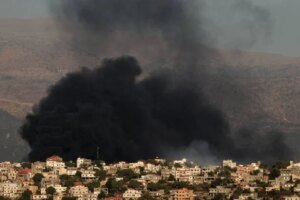
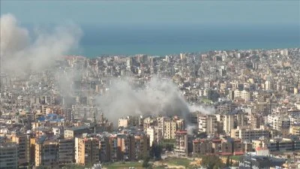
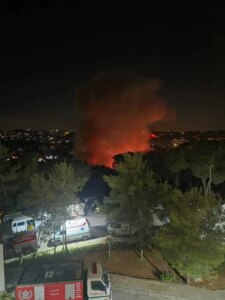
In the midst of the rapid events taking place in the Lebanese arena, including political, social and security issues, attention remains directed towards the south, where Israeli attacks continue on a daily basis. This situation pushes Lebanese officials to search for solutions that guarantee stability, in parallel with the plan adopted by the Lebanese army to disarm the south and north of the Litani River.
But the most important question is: Who will support the Lebanese army after it completes its deployment? Especially with the approaching date for Israel’s withdrawal from the occupied territories, and with the mandate of the International Emergency Forces (UNIFIL) approaching at the end of this year.
In this context, the website learned from private sources that there are three formulas being circulated at the diplomatic and political levels, in light of the desire of a number of countries to participate in any future arrangements that guarantee the continued presence of international forces in southern Lebanon to support the Lebanese army.
These approaches come in the wake of the recent visit of the President of the Republic, General Joseph Aoun, to Spain, where he discussed with Spanish officials bilateral relations and ways to develop them. However, the most prominent topic was related to the role of the Spanish forces operating within UNIFIL, and the most appropriate form for their continued presence in Lebanon after the end of the international force’s mission at the end of the year.
According to informed sources, Spain has expressed a clear and serious desire to remain in southern Lebanon within any framework agreed upon.
In parallel, consultations began between Lebanese officials and a number of countries to study three possible formulas to ensure the continued presence of international forces in the south, with their work primarily focused on maintaining stability, and monitoring and documenting repeated Israeli attacks and violations.
The three formulas presented:
– Creating a new international force, bearing a different name than UNIFIL, and operating within a modernized international framework, with modifications in tasks and powers to suit the next stage.
– Forming a European force affiliated with the European Union to replace UNIFIL, especially with currently participating countries, such as France, Spain, Italy and Germany, expressing their desire to continue deploying in the south. Spain has officially informed the President of the Republic of this desire.
However, this formula faces a fundamental obstacle, which is the desire of non-European countries, such as China and Indonesia, to remain within any new international framework in Lebanon.
– Resorting to bilateral agreements, if it is not possible to agree on the previous two formulas, through Lebanon concluding defense or joint security cooperation agreements with countries wishing to keep their forces in the south, or even bringing in forces from other countries within this framework.
Pending the formulation of the formula closest to implementation, Lebanese diplomatic efforts are continuing at the highest levels, in a proactive attempt to fill any vacuum that may result from the departure of UNIFIL forces, and to preserve the fragile stability equation in southern Lebanon.