Terms such as “blue moon” or “black moon” have not been part of traditional astronomical literature, but rather have appeared in the middle between science and the media in recent decades. Due to the spread of mass media and social media, ordinary moon cycles have turned into “rare events,” where the usual moon phases are presented as exceptional cosmic stories.
What is the “Black Moon” scientifically?
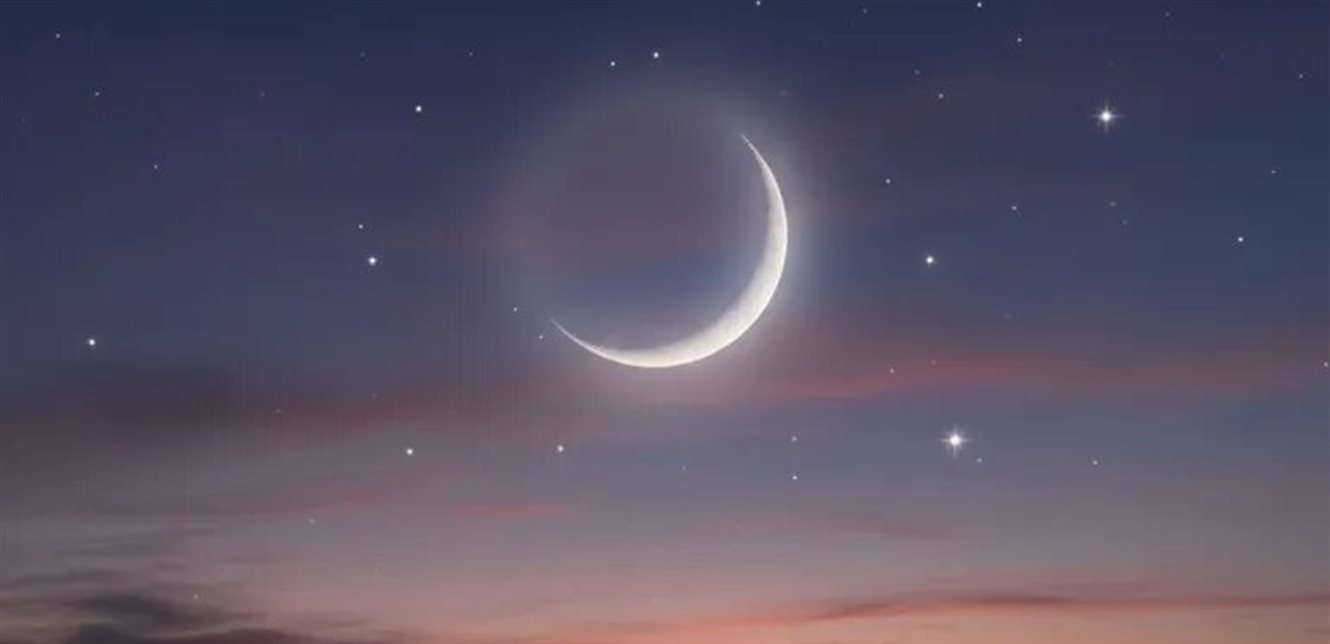
“Black Moon” is not an officially approved term by the International Astronomical Union, but it is a common description on educational websites. According to widespread definitions, the term often refers to two situations: The first is the occurrence of a “new moon” (new moon) twice in one calendar month, a phenomenon that occurs approximately every 29 months. As for the second definition, it is related to the seasons, as it is called the third new moon in a season that contains four new moons instead of three, and this situation is repeated every 33 months.
In both cases, the “black moon” remains invisible to the naked eye or telescopes, because the dark side of the moon is facing the Earth during the new phase, which makes this event, contrary to its exciting name, a phenomenon that cannot be seen with the eye.
Between “blue” and “black”: the naming story
These designations have their roots in the term “blue moon,” which was used in Western culture to express scarcity. However, its modern astronomical meaning (the appearance of two full moons in one month) came as a result of an editorial error in the magazine “Sky & Telescope” in 1946. With the spread of this term, the term “black moon” appeared by analogy to describe the recurrence of new moons, especially with the boom of digital journalism in the late twentieth century.
Expected events and opportunities for observation
The astronomical calendar recorded a similar event in August 2025, which is known in the media as the Black Moon according to the seasonal definition (the third new moon in the summer). It is expected that this event will be repeated in August 2027, when the month will witness two collapses; The first on the second of August and the second on the thirty-first. Although there is no physical change in the moon, these nights are considered a golden opportunity for amateur astronomers to observe faint celestial objects such as galaxies and nebulae, due to the complete absence of moonlight.
Astronomers at NASA and specialized websites confirm that these terms work to simplify science and bring it closer to the public, but they may cause some confusion if they are surrounded by an atmosphere of ambiguity. The “Black Moon” is not physically different from any other new moon, and does not have any special effects on Earth, which makes it a story about “language” and media narrative rather than an exceptional astronomical fact.