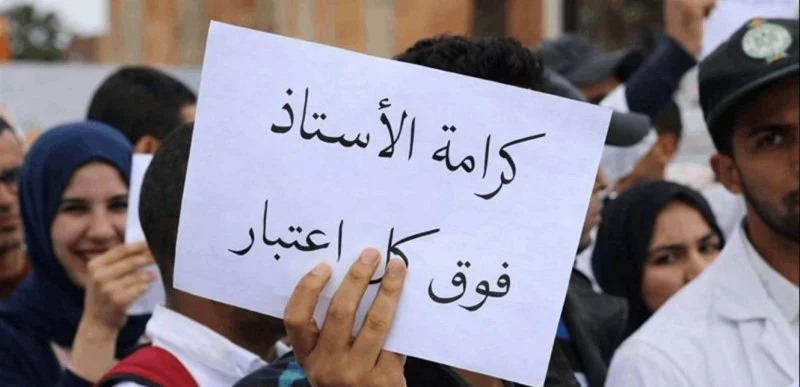
The Association of Contractual Teachers in Public Basic Education in Lebanon (CTLP) confirmed that it has repeatedly called to save the academic year, compensate for strike hours, and demand a fair increase in wages, in addition to paying contractors’ dues in full without any concessions. The association explained that it communicated its demands to the relevant authorities in the country and received positive feedback, which will be announced in detail tomorrow.
In a lengthy statement, the association stated that after two months of sporadic strikes in public schools, coinciding with a strike by the public sector and retirees, basic education associations are still endangering the academic year and the rights of contract teachers and students. The association warned from the beginning against turning the rights of professors into “a peg for narrow interests.”
The association added that the contractors’ demands were clear and clear: confirmation to end the “contracting heresy,” a 37-fold increase in salaries, and a transportation allowance for each working day. She indicated that she called on education associations to unify their efforts and take strong action through an open strike until the demands were met, considering that what happened later was a deception on this path, and led to a reduction in demands and a dispersal of efforts.
The Association recorded that the recent decisions of the Education Associations were conflicting: The Secondary Education Association announced that the government was granted a deadline and a strike of two days per week with a ceiling not exceeding 12 times, up from 37 times, knowing that the actual strike is equivalent to only one day due to Wednesday being considered a holiday in many secondary schools.
The Basic and Secondary Education Associations also decided to go on a one-day strike, with two options available: either a two-week deadline or a one-week strike.
CTLP wondered about the reasons for reducing demands and not resorting to an open strike, considering that the “soft war” and the deadlines granted were actually aimed at facilitating the holding of mid-year exams and procrastinating to overcome the movement crisis, which sparked widespread anger among permanent and contract professors.
The president of the association, Dr. Nisreen Shaheen, stressed the refusal to involve public education in non-educational disputes, and the refusal to exploit the suffering of teachers through intermittent strikes accompanied by words of thanks, stressing that this path “only leads to the destruction of students and teachers together.”
The association concluded by thanking every principal who decided not to comply with the strike and opening the doors of the official school to contractors and students, reiterating that it would build on the expected official response “what the situation requires.”
For weeks, the public education sector has been witnessing a state of tension due to the accumulated living demands of teachers, in light of public financial pressures and delays in approving meaningful increases.
Between intermittent strikes and political deadlines, the fear of losing the academic year increases, while the various associations seek to achieve a balance between rights and the continuation of education, amid mutual criticism about the ceiling of demands and pressure methods.