During the House of Representatives session devoted to discussing the draft budget for the year 2026, Representative Raji Al-Saad stated that reform is not limited to slogans or pleasing the outside, but rather is a bold internal decision that starts from the state, specifically reforming the public sector before targeting the private sector.
Al-Saad stressed that reform means stopping treasury advances that are spent outside the budget to ensure transparency, expanding the progressive tax base and moving from indirect taxes that burden citizens to a more equitable tax system, in addition to collecting wasted revenues from marine and land public properties and crushers, which are estimated at billions of dollars, instead of burdening people with the financial burden.
He believed that real reform requires implementing the 2017 law and restructuring the public sector in a way that does justice to competent employees, not maintaining what he described as a “farm” that includes about 32,000 illegal jobs that entered politics, while being left unaddressed, while employees and military personnel are oppressed with salaries calculated at an exchange rate of 15,000 liras. He asked: “Is this the reform we were promised?”
He also stressed that submitting an audited “break of account” constitutes an essential pillar of reform, considering that a state without accounts since 1993 is a state that has lost credibility, wondering about the fate of about 27 billion dollars missing, and about the state’s refusal to recognize more than 50 billion dollars in debts recorded in the books of the Bank of Lebanon, as confirmed by the Governor of the Central Bank. He pointed out that any citizen is obligated to pay his debts, while the state refuses to even recognize them.
Al-Saad considered that the bitter truth is that the flabby public sector is primarily responsible for the collapse of the private sector and the loss of people’s money, as a result of mismanagement, random employment, and failed financial policies. He considered that the government is evading addressing the root of the problem by pursuing the productive private sector and bearing the cost of the state’s failure.
He addressed the Prime Minister, saying that repeating the word “reform” in speeches is not enough, because reform is not a slogan but a practical path, and it should have started from the public sector, not from an attack on the private sector. He criticized a budget that relies 82% on taxes compared to only 11% on investment, considering that the government is behaving like a small stakeholder that is good at collecting and failing in organization and planning, and is asking how to secure today’s “yields” instead of asking how the citizen lives.
In his criticism, Al-Saad said, “If Al-Dekanji wins, he builds his home, and if he loses, he will be drunk and willful, but the state is not like that,” considering that the state is the contract that links the citizen to his land, and it is the prestige, the law, and the institutions that protect everyone and ensure justice, prosperity, and balanced development.
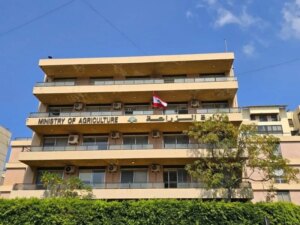
He pointed out that when he entered Parliament, he aspired to discuss real budgets for the ministries of Youth and Sports, Technology and Research, Education and Higher Education, Industry, Agriculture, Economy and Tourism, with the aim of supporting youth, developing artificial intelligence and scientific research, improving education, and enhancing production and exports, but he was surprised that the discussion revolved around the “Dekana Budget” and nothing more.
Al-Saad also raised direct development questions, including what prevents minimal investment in the Levant Road to enable the people of Aley and the Mountain to return to their villages. He criticized the allocation of only $248 million to the Ministry of Public Works despite its need for $848 million to restore the “roads of death,” considering that the citizen is not responsible for the dug roads while the state is responsible for them.
He stressed that the reform also includes strengthening the oversight bodies in which the vacancy has reached about 80%, considering that disabling oversight is a decision to leave the country to corruption, criticizing the appointment of accountants in some institutions, and stressing that the Finance and Budget Committee was forced to transfer funds to support the oversight bodies in order to be able to monitor the public sector.
He called for actual investment spending in infrastructure, especially repairing the Levant Road and opening transit horizons, instead of reviving old decrees for narrow interests, considering that the criticism he directs is constructive criticism stemming from concern for the covenant, stressing his confidence in the President of the Republic, General Joseph Aoun, and his support for the government in which he gave confidence, while betting on changing performance.
Al-Saad concluded by saying that the Lebanese private sector is the victim, not the executioner, and that his voice is a “cry of conscience” to address the root of the problem in the public sector, considering that there will be no resurrection for Lebanon without audited accounts, nor without a radical restructuring of the administration and implementation of the 2017 law, nor without a judiciary that holds accountable those who squandered billions, refusing to be a false witness to the “poverty, not development” budget, and stressing that restoring confidence begins with restoring people’s trust in the state before anything else.