January 27, 2026
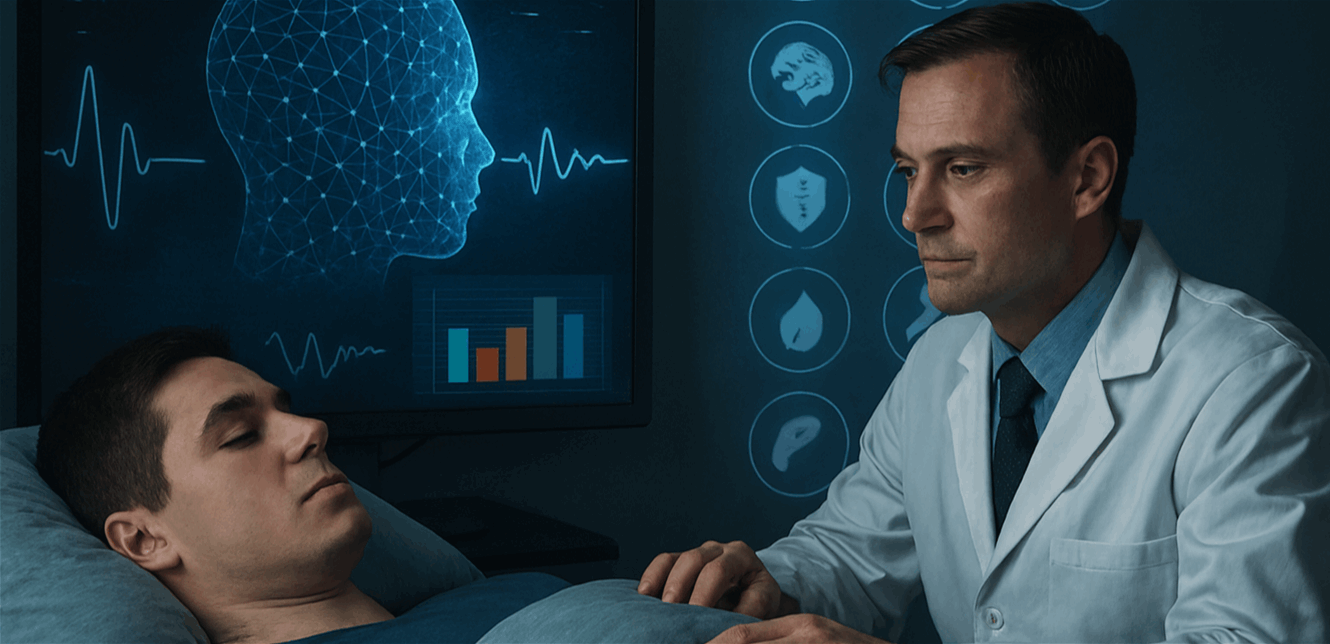
Researchers from Stanford University School of Medicine in the United States revealed the creation of an advanced model of artificial intelligence, which they called “SleepFM.” This model is able to analyze data from a single night of sleep and predict the probability of developing more than 100 future diseases, including heart and brain diseases and some types of cancer.
According to the study published in the journal “Nature Medicine,” the model is based on the analysis of multiple polysomnography data, which includes brain activity, breathing, heart rhythm, oxygen saturation, and muscle movement. This data is considered a “biological language” that accurately reflects the deep state of health of the body.
This model was trained on a huge amount of data, more than half a million hours of sleep recordings from more than 65 thousand people. This data was linked to their long-term health records, enabling the model to learn hidden patterns that precede the onset of clinical symptoms by years.
The results showed the model’s superior ability to predict cardiovascular diseases and degenerative brain disorders such as Alzheimer’s and Parkinson’s, in addition to assessing general death risks, even in individuals who do not suffer from any apparent symptoms.
Researchers believe that this development represents a qualitative shift in the field of modern medicine, as the role of artificial intelligence shifts from diagnosing disease after it occurs, to a proactive warning role that monitors subtle changes in body functions before they develop into chronic diseases.
Despite the enormous potential, scientists have drawn attention to ethical and scientific challenges, including privacy protection, interpretability of AI results, and fair representation of population data, especially as these models move toward wearable devices.
This research opens up broad horizons for the possibility that sleep recording may, in the future, become part of routine medical examinations, along with blood tests and blood pressure measurements, within the framework of predictive medicine that focuses on prevention before treatment.