January 27, 2026
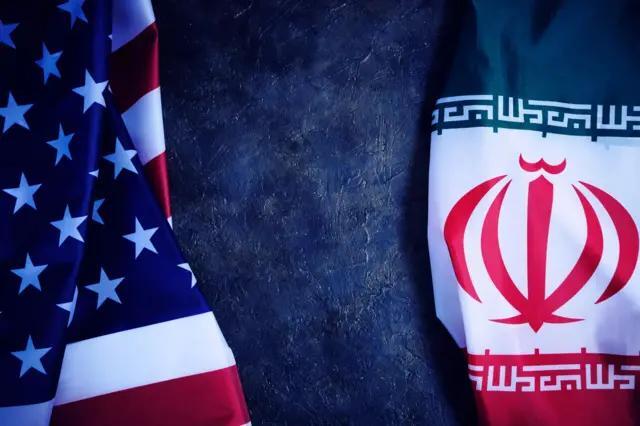
revealed New York TimesIn light of the escalation of regional tension, the US President Donald Trump In recent days, he received a series of intelligence reports described as “remarkable,” indicating that the Iranian government’s position has become the weakest since the overthrow of the Shah’s regime in 1979, which brings the scenario of escalation, all the way to the military option, back to the forefront.
According to the newspaper, quoting officials familiar with these assessments, the US intelligence services believe that the Iranian regime’s grip on the interior has declined in an unprecedented way, against the backdrop of the widespread wave of protests that broke out at the end of last year and reached their peak in early January, even in areas that were traditionally considered among the most prominent strongholds of support for the Supreme Leader. Ali Khamenei.
Although the pace of protests subsequently subsided, intelligence estimates confirm that the Iranian government is still in a fragile situation, in light of a stifling economic crisis, accelerating inflation, and a clear decline in the ability to deal with living pressures. Reports indicate that the violent repression adopted by the authorities contributed to deepening the rift between them and large segments of society.
In this context, the New York Times quoted White House spokeswoman Caroline Levitt as saying that Trump receives “regular intelligence briefings on global developments,” stressing that the Iranian file is being monitored “on a daily and precise basis,” and that ignoring this data would be a breach of his responsibilities as Commander-in-Chief of the Armed Forces.
These data coincide with a remarkable American military buildup in the region. The aircraft carrier “Abraham Lincoln” entered the US Central Command’s area of responsibility in the western Indian Ocean, accompanied by three warships equipped with “Tomahawk” missiles. According to military sources, the carrier can, in theory, carry out military operations within a period ranging between 24 and 48 hours in the event of a political decision to do so.
Also, the United States sent an additional squadron of F-15E fighters, and deployed Patriot and THAAD air defense systems, in anticipation of any possible Iranian response targeting American forces or interests. Long-range bombers stationed within the United States were also placed on higher alert than usual.
On the other hand, the newspaper points out a division within the Trump administration over the feasibility of directing a military strike against Iran, especially if it is limited or “symbolic,” amid fears of sliding into a broader, uncalculated confrontation. Remember that Trump had previously hinted at the possibility of a strike, before he temporarily backed down after Tehran announced the suspension of executions against a number of protesters.
The New York Times also quoted a senior American official that the Israeli Prime Minister Benjamin Netanyahu He had asked Trump at an earlier stage to postpone any military action against Iran, in light of careful regional and security calculations.
In parallel, Trump escalated his tone towards the Iranian nuclear program, warning against the continuation of the enrichment path, while the Republican Senator said Lindsey GrahamAfter talks with Trump, he said, “The goal is to end the regime,” considering that stopping repression temporarily does not change the essence of the problem.
On the field, senior leaders intensified Pentagon Their consultations with regional allies. The Commander of US Central Command, Admiral Brad Cooper, conducted a tour that included Syria, Iraq and Israel, during which he discussed the repercussions of any possible escalation with Iran, in addition to the conditions of US forces and detention centers in northeastern Syria, in light of fears of ISIS members fleeing.
According to American officials, Washington carried clear messages to Baghdad stating that any attacks carried out by pro-Iranian factions against American forces will be met with a direct response. It also included Saudi and Qatari communications, in addition to close coordination with Israel, as part of a comprehensive assessment of the repercussions of any potential military move.
The New York Times concludes that the coincidence of the fragility of the Iranian internal situation with the unprecedented American military buildup is bringing the confrontation scenario back strongly to the forefront, even though the decision to go for a military strike remains, until now, a hostage to the political and strategic calculations in the White House.