January 27, 2026
Call of the homeland
The recent war between Hezbollah and Israel revealed the extent of the massive security breach within the party’s ranks, especially in the assassinations that targeted its most prominent leaders, led by Secretary-General Hassan Nasrallah and his successor, Hashem Safi al-Din. It is a security breach that cannot be reduced to a technical breach, as some Hezbollah leaders are trying to say. According to a security source, “There is a clear and unambiguous human breach, but the party is trying to hide and camouflage it, and the arrests of agents that we have seen in the recent period do not clearly express the extent of the human breach.”
This suggests that Hezbollah is prosecuting the agents it discovers itself, while handing over a small number of them to the security services. This is information confirmed by more than one source to “Call of the Nation.” The goal of this is to preserve the image of a resistant “party” environment that is not tempted by money and does not sell the cause.
The truth is that the “Israeli agents” file has turned into a real nightmare within the “party” leadership, and secret internal investigations are being conducted, which are not announced, to resolve the issues and not shake confidence in its strength and the loyalty of its environment, according to the sources.
Months ago, about 21 people were arrested, most of them close to the leaders and cadres of the “party.” It was found that their espionage role enabled the Israelis to assassinate dozens of leaders based on the information and coordinates they provided to the “Mossad.” The most prominent of these was the religious vocalist Muhammad Saleh.
On the other hand, a security source believes that “these names that come to light and are handed over to the state and the competent authorities are only a small part of the system of spies and agents recruited by Israel.”
They planted devices in Nasrallah’s hideout
On the anniversary of the year, the Israeli newspaper “Yedioth Ahronoth” revealed that “the assassination of Nasrallah, who changed the face of the Middle East through 83 air bombs, was preceded by a secret field operation by the Mossad, which brought unique equipment into the heart of Nasrallah’s stronghold in the southern suburb of Beirut, which was surrounded by Hezbollah guards.”
During the Israeli Air Force’s raids on the “party’s” strongholds in the southern suburb, a number of people, according to the newspaper, infiltrated a neighborhood in Haret Hreik carrying elaborately camouflaged packages. They crept into the narrow alleys, stuck to the walls, and hoped that their employer had coordinated with the Israeli army so that the Air Force would not bomb the path they were taking.
Intelligence information from Unit 8200 and the Military Intelligence Division reported that Nasrallah would meet there with the commander of the “Quds Force” in Lebanon, General Abbas Nilforoushan, and the commander of the southern front in “Hezbollah,” Ali Karaki. And it happened.
Internal executions
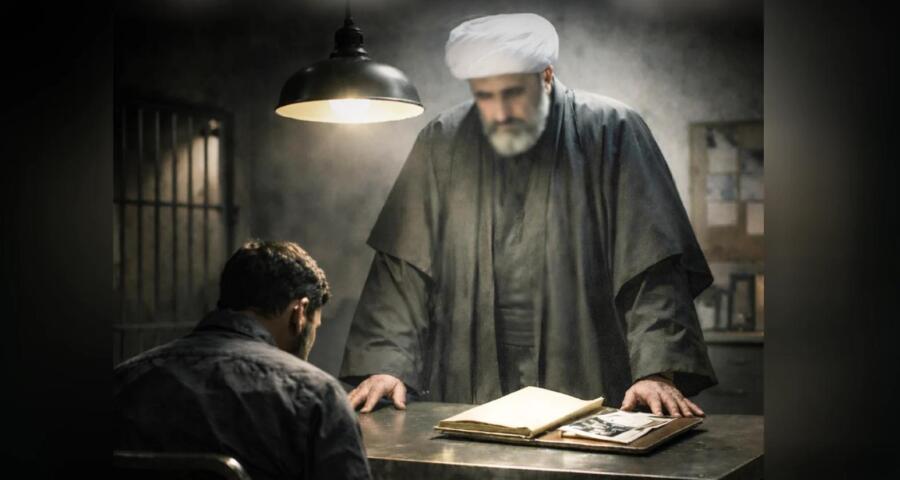
Ali Al-Amin, the political writer opposed to the “party,” says, “Hezbollah cannot reveal the names of the agents within it. It intends to hold them accountable secretly and may execute some of them and then mourn them as the party’s martyrs who fell while carrying out a jihad duty, and because the party does not want to fall into the trap of demanding, either from the client’s family or other parties, to hand over the accused to the Lebanese judiciary. Therefore, if he is one of those accused of dealing with the partisans, then this remains a secret.” Within the party.”
Al-Amin believes in his speech to “Nidaa Al-Watan” that “the support war showed, from its beginning, the presence of an Israeli breach in the security and military structure of Hezbollah, which it had always been proud of. The breach was, in part, a technical breach of the communications network belonging to “Hezbollah” and that of the Lebanese state, but that does not hide the existence of human breaches, the facts of which have only leaked, as the defeat suffered by “Hezbollah” cannot be attributed to a state of great exposure to Israel, noting that The assassinations that targeted the first and second categories in its ranks assume a human breach.”
Al-Amin points out that “Hezbollah” was founded on an ideology that says that it is carrying out a divine mission and implementing divine decisions. Therefore, it does not see in its behavior anything that deserves accountability or criticism, because it does not make mistakes, and therefore the party cannot acknowledge, admit, and name individuals or officials who were involved in dealing with Israel, and if some names appear publicly, they are on the edge of the party, not at the heart of the decision or from within the party structure.
Al-Amin confirms the existence of secret trials, and “everyone knows that the party has judicial bodies that deal with internal party issues, including the issue of agents, and the matter remains in an undisclosed secret realm.”
Last September, former Mossad director Yossi Cohen published a book titled in Hebrew, “With tricks you will make war for yourself,” and in its English version, “The Sword of Freedom: Israel’s Mossad and the Secret War.” In its final part, he discussed his legacy in the Mossad, especially his methods of recruiting agents. Cohen recounted how, during his service, he assumed the character of an “antiquities expert” in Baalbek, Lebanon, and the character of a “tea bag collector” in front of a Lebanese tea merchant in Sudan.