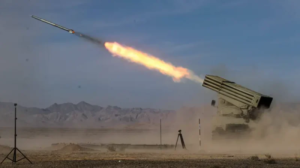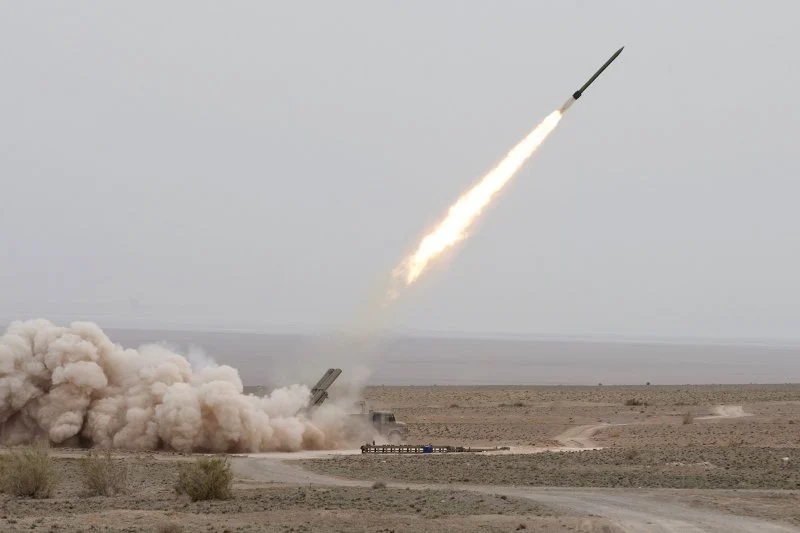
In an in-depth analysis of what is known as Iran’s “long arm,” Nitzan Sadan, an Israeli military writer, reviewed in his report the arsenal of Iranian ballistic missiles, explaining the most important missile families developed by Tehran, clarifying the distinctive features of each category in terms of range, speed, accuracy, and launch mechanisms, in addition to the nature of the risks that may arise from a wider military confrontation.
The report confirms that Iran has developed five main families of ballistic missiles capable of reaching Israel, and that understanding the differences between them is necessary to assess the level of the real threat, pointing out that a large part of the capabilities promoted in the media may remain within the “theoretical” framework more than being a practical reality.
The first family: “Shahab” – the most widespread… but its intelligence footprint is clear
The roots of the “Shahab” family (which means “meteor” in Persian) go back to the Iran-Iraq war, when the Iranians realized that they lacked an effective response to the waves of ballistic missiles launched by Saddam Hussein.
According to the report, Iran began purchasing “Scud” missiles from Syria and Libya in 1985, then from North Korea later, before completely dismantling and reverse engineering them locally. By 1988, it was able to build a local production capacity, and has continued to gradually improve these missiles to this day.
The writer points out that “Shahab” missiles are the most common in the Iranian arsenal among missiles capable of reaching Israel, but most of them rely on liquid fuel, which means that they need time to refuel before launch, which creates a logistical delay and an intelligence footprint that is difficult to hide and limits the element of surprise.
This family includes models such as the old “Shahab 3,” “Emad,” which Iran described as very accurate, and the two-stage “Qadr 110,” in addition to “Qiam,” which has a range that exceeds the ability to reach Israel even if launched from western Iran.
The report points out that the launch platforms for missiles of this family are huge and depend on very long trucks, which makes it more difficult to hide them compared to other models, as they need protection convoys and support teams, which increases the level of monitoring before launch.
“Emad” and “Qadr” are considered the most important in this group, with a range of up to 2000 km and a warhead ranging between half a ton and a ton. Some versions may also include cluster heads carrying between 12 and 36 small munitions launched in the final stage of the fall.
Despite the possession of advanced models of this family with satellite navigation components to improve accuracy, the report doubts its effectiveness in the field, noting that many of the missiles that were not intercepted did not hit their targets with great accuracy.
The writer adds that the flight path of “Shahab” missiles is often high (may reach 500 km), which makes them relatively easy to detect and intercept, considering that they may be used primarily to create “numerical pressure” on air defenses by launching large quantities in a short time.
The second family: “Fateh” – the most dangerous because of solid fuel and maneuvering warheads
The report sees that the “Fateh” family (meaning “Conqueror” in Persian) is the most diverse within Iran’s arsenal, and that it is one of the most tactically sensitive families.
Its beginnings also go back to the stage of the Iran-Iraq war, when Iranian engineers re-engineered a Soviet artillery missile known as 9K52 “Luna,” before it later turned into a more accurate and reliable version called “Zelzal 2” in 1996, then developed into actual ballistic missiles such as “Fateh 110,” which entered service in 2002 and benefits from satellite navigation to achieve a better hit within a range of 300 km.
The most important difference in this family is that many of its models rely on solid fuel, which gives it an almost instantaneous launch capability without the need for refueling, and makes its transport and concealment easier compared to the “Shahab” family.
According to the report, this family has expanded to include multiple models, most notably:
“Khalij Fars” anti-ship with radar guidance head
“Fateh 360” with a range of 120 km via a six-tube launch platform
“Fateh 313” with a range of up to 500 km
“Fateh Mobin” equipped with a camera in the front for visual guidance that is difficult to jam
The miniature “Ababil” suitable for maritime use
It is also not ruled out to develop an air-launched version.
But the most dangerous in this family, according to the writer, is the existence of 3 models that have more powerful engines and “maneuvering” warheads capable of adjusting the path during the final descent, which makes it difficult to calculate the path and intercept it.
“Kheibar Shekan”
The report estimates the speed of this missile at “Mach 8 to 9,” and its range is 1450 km with a warhead weighing about 550 kg, which means that hitting Israel requires launching it from western Iran, which may limit the flexibility of use.
“Kheibar Shekan” is characterized by a launch platform much smaller than the “Shahab” platforms, as a single truck can carry two missiles. There is also a version that can be hidden inside a truck that looks “normal” covered with cloth, which increases the chances of using it from populated or hidden areas.
“Haj Qassem”
It is larger and heavier and consists of two stages, which allows maintaining acceleration for a longer period and reaching a speed of approximately “Mach 13,” with a maneuvering warhead weighing approximately 500 kg.
Iran claims that it is resistant to jamming, but the report indicates that Tehran is facing difficulty in manufacturing complex solid fuel engines after the damage to production infrastructure during the last year, which suggests that the number of this type is limited.
“Fateh 1”
Iran has promoted it as “uninterceptable,” arguing that it launches a warhead with an independent engine and maneuvers during descent, but the writer downplays the value of this propaganda, stressing that most ballistic missiles are naturally “supersonic,” and that this type has also been intercepted, especially after it was used by the Houthis during the past year.
The report adds that “Fateh 1” has a relatively lighter warhead (about 350 kg) because the head needs special fuel, and it also takes a lower path of about 135 km, which may make it discovered a little late.
The third family: “Khorramshahr” – heavy missiles with huge heads and fears of multiple heads
The third family is “Khorramshahr,” named after a city in western Iran that witnessed major battles during the war with Iraq, and they are heavy missiles designed to carry huge heads that may reach 1.8 tons.
The report explains that they are based on North Korean missiles of the “Hwasong-10” type, which are rooted in a Russian design originally intended for launch from submarines, which explains their short and thick shape that allows carrying large quantities of fuel.
The writer points out that the diameter of the “Khorramshahr” missile reaches about 1.5 meters, compared to about one meter in “Emad” and “Qadr,” and about 76 cm only in “Fateh,” which gives it the ability to carry huge heads or multiple heads or large cluster munitions of up to 80 small bombs.
The report points out that at least one of these cluster heads was used in the field, but it did not cause significant damage.
The most dangerous threat, however, is the possibility of the missile possessing multiple independently targetable reentry vehicle (MIRV) warheads that separate in space and turn into several targets that must be intercepted individually, but the report confirms that this capability has not been clearly displayed, and it is not known how ready it actually is.
The writer considers that the most dangerous model in this family is “Khorramshahr 4,” also known as “Kheibar,” as it can carry a warhead weighing 1.5 tons for a distance of 2000 km, with the possibility of making course corrections in the flight stage outside the atmosphere to improve accuracy.
The report also quotes Iranian media as saying that the missile may fly at a very low altitude of about 126 km, but it doubts the validity of this information and suggests that it may be an attempt to mislead to reduce the possibility of predicting its path.
It is noted that “Khorramshahr” operates on liquid fuel, which gives it a relatively faster preparation capability compared to some other liquid missiles, but it remains a complex and expensive weapon, and the writer suggests that the number of these missiles is limited, with large and easily monitored launch platforms.
The fourth family: “Sejjil” – pure Iranian production and a range that exceeds the region
The fourth family is “Sejjil” (meaning “Sulphur”), and the report describes it as the Iranian missiles “most authentic,” as they are not just a development of a foreign model but a complete local production.
“Sejjil” are huge two-stage missiles that rely on solid fuel, and are classified as among the longest-range missiles in Iran, as estimates indicate their ability to reach 2500 km and more, i.e., beyond Israel to the depth of Europe.
The weight of their warheads ranges between half a ton and 1.5 tons, but like other heavy missiles, they are expensive and rare, and their launch platforms are huge, and the report also suggests that their path is very high, which makes them easy to monitor and intercept.
The fifth family: “Fateh 2” – the latest threat: a mobile gliding missile at tremendous speed
The report concludes with the family of “maneuvering hypersonic” missiles, which currently includes one model known as “Fateh 2,” and the writer considers it the most interesting.
He describes it as close to “Fateh 1” in terms of weight, lightness, reliance on solid fuel, and fast launch platform, but the main difference lies in the shape of the warhead, which resembles a small plane, with large fins and a flat design that allows generating lift during flight.
According to the report, “Fateh 2” launches at a sharp angle upwards and then descends quickly before launching the head, which begins the “glide phase” dynamically in space, by lowering the front to gain speed and then raising the height again, which is a mechanism that gives it greater maneuverability than traditional zigzags, while maintaining high energy until reaching the target from a range that may reach 1800 km.
The writer warns that this type, due to its speed, low path, and ability to maneuver, may pose the greatest challenge to defense systems compared to traditional models.
Despite this, the report indicates that Israeli defenses still possess advanced interception capabilities, and also mentions that Iranian reports spoke of the warhead possibly using liquid fuel, which means that it also needs a refueling process that complicates the launch.
Between theory and reality: The threat exists… and Iran is good at “patching” after strikes
The writer stresses in his conclusion that all of the above remains within the framework of “declared and theoretical” capabilities, especially since Iran has been exposed during the months following the “M’a Klopia” operation to significant damage to missile production and development facilities, which forced it to manufacture missiles quickly and in less than ideal conditions, and using Chinese equipment as an alternative to local equipment that was specifically designed for Iranian industry.
But on the other hand, the report warns against underestimation, considering that “patching” and creativity under pressure are among Iran’s oldest skills, citing its previous ability to re-engineer F-14 fighters during the American embargo, copy advanced drones, and even analyze Israeli “Spike” missiles that it obtained through Lebanon.
Therefore, the writer considers that the danger is not only related to the accuracy or modernity of the missile, because “even a bad missile is capable of reaching and exploding,” stressing that high interception rates do not mean the absence of danger, as there is no “complete air defense” in any war.