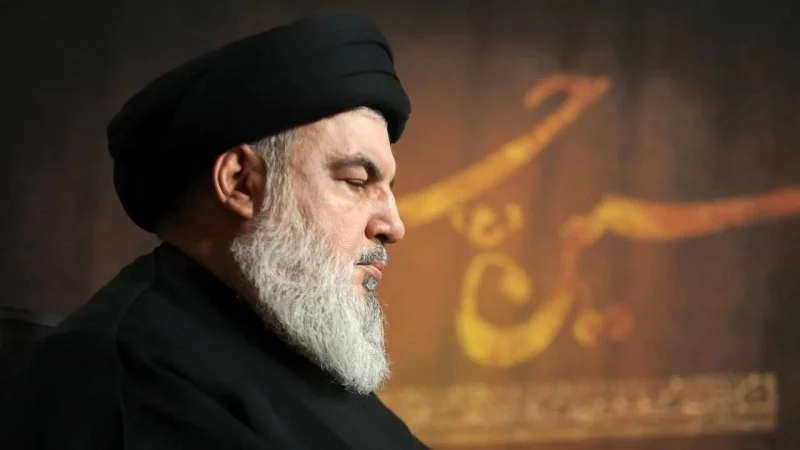
The Israeli newspaper “The Marker” reported in a report published on Thursday that the Israeli army carried out one of its most expensive and complex operations during the war with Hezbollah, which was the assassination of the Secretary-General of the party, “Hassan Nasrallah,” in the southern suburb of Beirut, at a cost of approximately 125 million shekels.
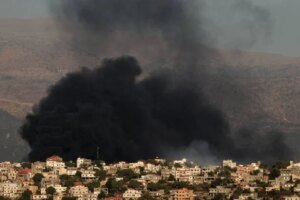
According to the report, at noon on September 27, 2024, fighter jets from Squadron 69 of the Israeli Air Force took off from the Hatzerim Air Base, carrying with them dozens of tons of bombs, to carry out what the newspaper described as “one of the most important missions in the war against Hezbollah.” The Israeli aircraft dropped bombs with a total weight of 83 tons, in an operation that the newspaper stated left no chance of survival for “Nasrallah” or a number of leaders who were with him.
The newspaper explained that the Israeli Air Force was not limited to direct bombing, but sought to disrupt the rescue movement in the vicinity of the southern suburb, by causing artificial traffic congestion and dropping additional ammunition, with the aim of preventing the arrival of ambulance teams or any rescue forces to the target site, as part of intensive preparations aimed at ensuring “a decisive and unambiguous result.”
The report added that the operation was later subjected to a series of evaluations within the Israeli army, including a detailed financial assessment, which showed the following:
25 million shekels were allocated for the ammunition used in the direct bombing.
The rest of the cost was distributed over flight hours, fuel, and additional ammunition used to prevent rescue operations.
On the same day, strikes were also carried out against missiles fired by Hezbollah, which required the use of interceptor missiles at a cost of tens of millions of shekels.
According to “The Marker,” the decision to calculate the cost of the assassination of “Nasrallah” is due to a working mechanism adopted by the Israeli army during what is known as the “Battle Between Wars” in Syria during the past decade, where the Financial Advisor Unit of the Chief of Staff began pricing military operations, with the aim of presenting its cost to the political level and the government, and determining the amount of funding required from the Ministry of Finance.
The scope of this mechanism was expanded during the “Iron Swords” war, which the Israeli army fought on several fronts and at different levels of combat.
The report included striking figures on the total cost of the war:
The direct security cost is estimated at about 222 billion shekels.
The average cost of one day of the war was about 280 million shekels.
The most expensive day of the war cost Israel about 1.3 billion shekels, and it was at the beginning of the war after the ground entry into Gaza, when the army called up about 220,000 reserve soldiers, moved tanks and armored personnel carriers, and used huge quantities of equipment.
The newspaper also indicated that the Israeli army carried out about 20 attacks on the Houthis in Yemen, the cost of each attack ranging between 30 and 50 million shekels.
According to the report, the Israeli Ministry of Finance estimates the total cost of the war, including civil expenses (compensation, property damage, sheltering displaced persons, and financing costs), at about 277 billion shekels, while the Bank of Israel estimates it at 352 billion shekels.
The newspaper explained that the reason for this difference is due to the difference in methodology, as the Ministry of Finance calculates the cost compared to the planned budget deficit before the war, while the Bank of Israel includes costs extending to 2026, including debt interest and arms deals, in addition to part of the American aid.
It also pointed to the existence of a traditional gap between the estimates of the army and the Ministry of Finance, where the army estimates the security cost at 222 billion shekels, compared to about 170 billion according to the Ministry of Finance.
The report concluded by pointing out that the lessons learned from the October 7 attack, and the resulting permanent increase in the defense budget and the increase in public debt, may impose additional burdens of about 50 billion shekels annually over the next decade, and most of these burdens will be to finance increased military spending and debt service.