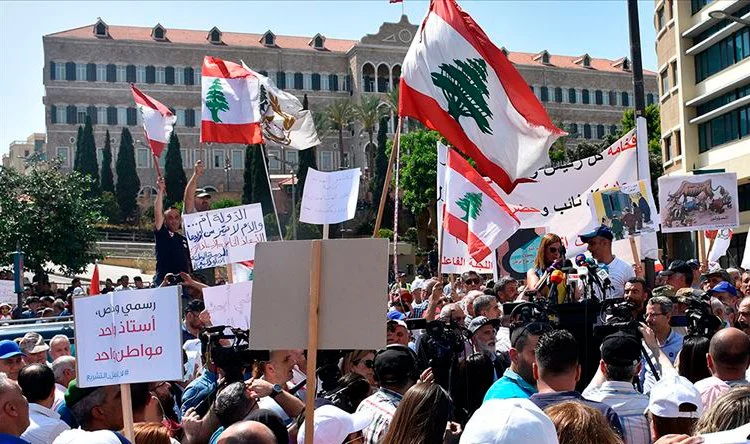
The ongoing strike and the threat of a “educational rebellion” may be the preoccupation of the street and public sector employees. In the absence of any signs of imminent solutions, or even “official promises” to respond to the demands, an informed economic authority reveals to a serious problem concerning the financial situation. It clarifies that there is no possibility of providing additional funds or benefits to employees or veterans, due to the deficit in the public treasury and the inability to make any changes in the size of spending or revenues.
The economic authority points out that most public sector employees today receive financial compensation not exceeding $2,000 upon retirement after 30 or 40 years of service. It confirms that any talk of raising salaries, reform, or increasing end-of-service compensation to match the new financial situation and inflation in the country will be mere “unrealistic talk, if not empty talk.”
The economic authority indicates that the public treasury is empty and there is no prospect of any new funds entering, especially since the continuation of the strike in the public sector for additional days will lead to a decrease in the fixed revenues of the treasury, which are collected in return for the public services provided by the public sector with all its institutions to citizens. Therefore, when these services stop, no funds will enter the treasury.
In response to a question about possible solutions, the authority confirms that there are many possible internal solutions today, but they are still outside the scope of research, including taking advantage of the gold reserve, the price of which is rising daily, through plans to invest this reserve, which exceeds $45 billion today.
Based on these data, the public sector employees’ salary crisis has turned into a dilemma and an internal and external crisis at the same time, because the management of Lebanon is “external,” meaning the decisions taken in any financial, economic, or even political field, according to the same authority, which does not expect any government approaches or treatments, and asserts that the strike is “inevitable,” because the movement in the street clashes with a painful reality that is not amenable to any effective treatment.