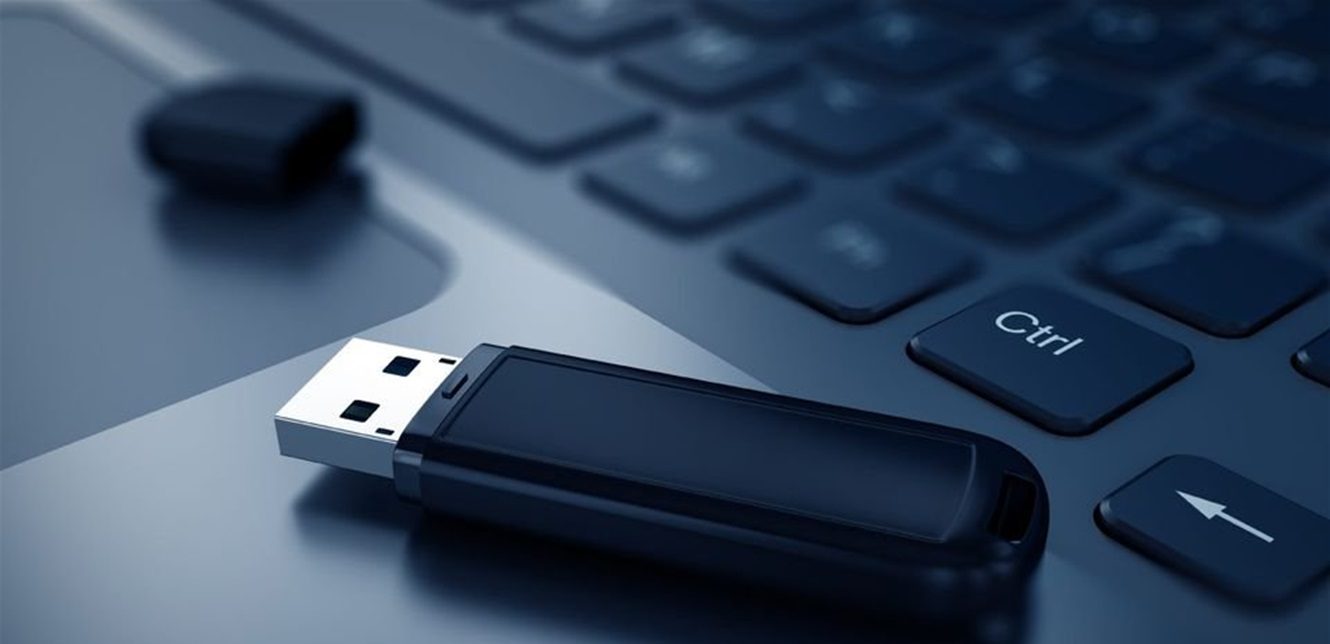
Technology experts have warned against relying on traditional flash memory (USB) as a primary method for backing up important files. Despite their ease of portability and small size, their technical problems make them an unreliable option for protecting data for long periods.
It is true that flash memory (USB) is commonly used for saving and transferring files between devices, but it is not designed to be a primary means of long-term backup.
One of the main problems is that the memory used in these devices has a limited write lifespan. They often use data cells that can withstand fewer write cycles compared to high-quality storage media, such as solid-state drives (SSDs).
This increases the risk of cell damage and data loss over time.
In addition, traditional small flash drives (USB) are prone to loss, mechanical or thermal damage, or even complete failure when storing data for long periods without periodic checks. Since traditional flash drives (USB) do not typically include advanced protection systems, the likelihood of errors or data loss increases significantly compared to other storage media.
This means that even if you can transfer your files to traditional flash drives (USB), relying on them as a sole backup may ultimately lead to permanent loss of your data if they suddenly fail.
Safer alternatives
Instead of relying on traditional flash drives (USB), experts advise using a multi-layered backup strategy that includes external hard drives that offer greater storage capacity and higher reliability, and solid-state drives (SSDs) that are faster and more reliable, but more expensive.
They also advise relying on cloud storage, which allows backups to be saved on online servers with access from anywhere.
Experts emphasized that the best way to back up is to follow the “3-2-1” rule: that is, three copies of your data on two different storage media, and one copy off-site. (Erem News)