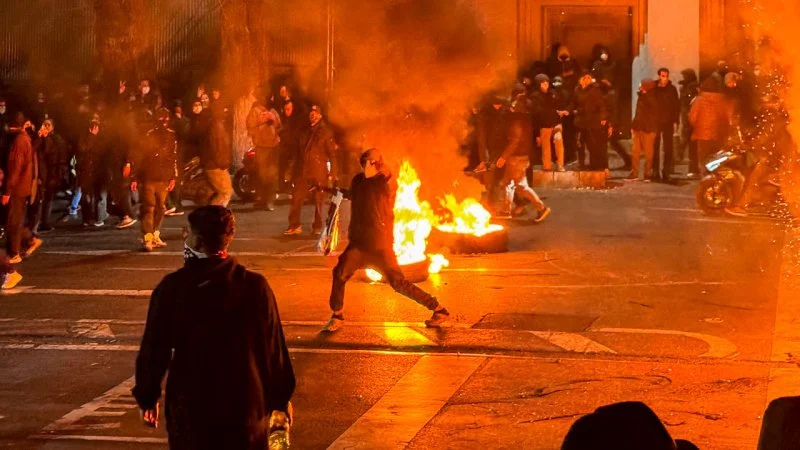
Iran has been witnessing a wave of widespread popular protests for more than two weeks, affecting more than a hundred cities and towns across the country, and in many areas turning into clashes between protesters and security forces. According to a human rights organization based in Norway, these events have so far led to the death of 192 people, while the Iranian news agency “Tasnim” reported the death of 109 security and police personnel, amid a near-complete interruption of Internet service throughout the country since last Thursday.
These protests, according to the data, reflect accumulated social and economic demands that have not found a sufficient response from successive governments, amid increasing economic pressures, deteriorating living standards, rising inflation and unemployment rates, in addition to demands related to public freedoms and mechanisms of political participation, which contributed to widening the gap of trust between broad segments of society and state institutions.
In his latest statement, Iranian President Masoud Pezeshkian said in an interview with the official Iranian Radio and Television Authority on Sunday morning that “terrorists linked to foreign powers are killing innocent people, burning mosques and attacking public property,” accusing the United States and Israel of trying to “sow chaos and disorder” by directing orders to “rioters” to destabilize the country. At the same time, he affirmed his government’s commitment to addressing the economic and social conditions, and the regime’s readiness to listen to the people’s complaints.
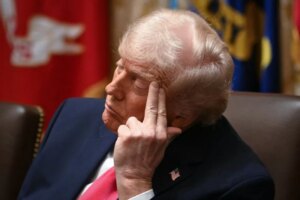
For his part, Iranian Parliament Speaker Mohammad Baqer Qalibaf warned Washington against launching any attack on Iran, considering that any American strike would make Israel and all American military bases, centers and ships in the region “legitimate targets.” This warning came in response to threats by US President Donald Trump to intervene in the wake of the use of force against protesters.
In Washington, the US administration stresses its support for the right of Iranians to peaceful demonstration, while criticizing the Iranian authorities’ handling of the protesters, in the context of a speech that focuses on human rights issues, and converges with broader disputes that include the nuclear file, the missile program, and Iran’s regional role. Trump wrote on his “Truth Social” platform that “Iran is looking forward to freedom, perhaps more than ever,” and that the United States is “ready to help.”
The New York Times and the Wall Street Journal quoted US officials as saying that military options to strike Iran had been presented to Trump, without making a final decision on them. In the same context, three Israeli sources told Reuters that Israel is on high alert in anticipation of any possible US intervention.
Observers believe that the course of the protests depends primarily on the ability of the Iranian regime to meet economic demands and address social grievances, more than being directly affected by external pressures, in light of the continued state of regional and international tension surrounding the Iranian file.