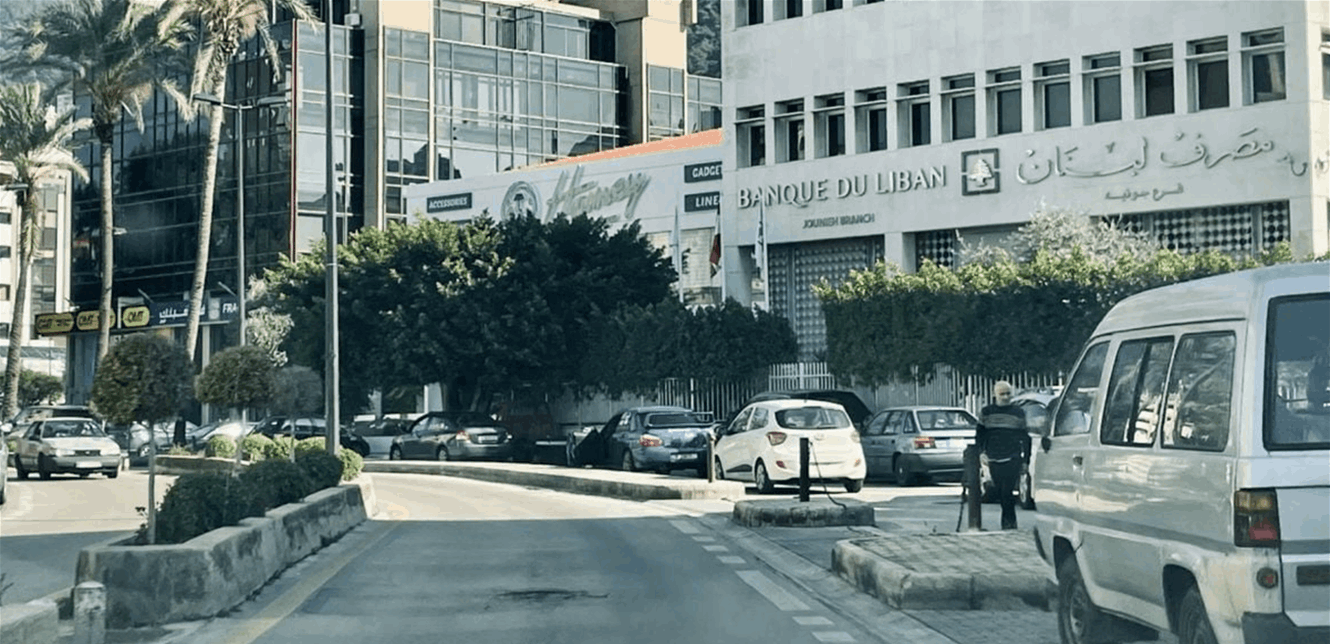
The announcement by the Governor of the Banque du Liban, Karim Saïd, regarding the launch of legal and judicial proceedings against those involved in embezzlement or misuse of the Central Bank’s funds was not just a routine news item, but a remarkable shift in official discourse. For the first time, a former official within the Central Bank is publicly mentioned as a suspect, representing a break in a barrier of taboos and opening the door to accountability. However, the importance of this step, no matter how exceptional it may seem, does not negate the fundamental question: Are we facing the beginning of an actual correction of a troubled financial and monetary path, or just a belated attempt to address the symptoms of a crisis that is far too deep to be reduced to legal files?
The Governor of the Banque du Liban, Karim Saïd, stated that he had filed a complaint before the judiciary against a former official in the bank and another person who “seized funds through four shell companies, leading to illicit enrichment,” without mentioning their names, but financial sources indicated that the intended target was the former Governor of the Central Bank, “Riad Salameh,” and his brother, “Raja.”
In a press conference, Saïd affirmed the adoption of legal and judicial measures targeting anyone proven to have embezzled or misused the funds of the Banque du Liban, leading to the depletion of the bank’s assets, as well as targeting anyone who violated the circulars of the Central Bank.
He pointed out that these measures aim to recover the funds that were used or wasted, so that the recovered funds constitute liquidity allocated to return the depositors’ funds, which is a financial, institutional, and legal obligation that the bank is committed to performing transparently. He revealed that the Central Bank has filed a complaint before the judiciary against a former official in the bank and another person who seized funds through four shell companies, leading to illicit enrichment, and the facts and evidence show that they were aware of the consequences of their actions.
Saïd clarified that the Banque du Liban is preparing a comprehensive report aimed at inventorying and estimating all the funds placed in the custody of previous governments until 2023, or those paid by the bank on their behalf, in order to determine the amounts, circumstances, foundations, and channels necessary to satisfy these entitlements. He pointed out that the bank has requested legal consultations to preserve its rights, and these claims are based on clear evidence, and it will not hesitate to establish its rights and collect them exclusively to return depositors’ funds.
He also affirmed that the Central Bank is working in cooperation with international investigators and offices to recover funds located abroad, which were seized through companies, officials, and individuals who conspired against its funds.
Financial and economic expert Dr. “Bilal Alameh” says that there is no dispute that initiating lawsuits is a legal and moral necessity, as it breaks an official silence that has lasted for years, and has given the depletion of public funds and cash reserves the character of a fait accompli. However, the Lebanese experience indicates that recovering embezzled funds is not decided by an internal decision alone, but requires a more complex path: tracking the movement of funds outside the borders, activating international judicial cooperation, and the availability of a genuine political will to lift the cover off those involved, no matter how high their positions, as well as reconsidering the nature of the agreements signed with countries that formed stations for the passage of these funds.
From here, the effectiveness of the procedures, according to “Alameh,” depends on their ability to cross geography and politics together, and break the network of banking and legal complexities that often granted the transferred funds a formal legitimacy, or wrapped them in justifications that were accepted in previous stages, but accountability is not measured only by the number of open lawsuits, but by its ability to prevent the recurrence of the crime. The crisis was not an individual error or an isolated administrative deviation, but the result of a financial-monetary model that allowed the overlap of political decision with monetary policy, and turned its back on the standards of governance and transparency. Without dismantling this model, accountability remains threatened to become an exception rather than a rule.
In this context, according to professor of economics and management “Bilal Alameh,” one cannot ignore what the governor himself revealed about the size of the funds lost or loaned to the state, which are not limited to about “$16.5 billion,” but may amount to three times this figure, as this confirms that we are facing a huge gap that is not reduced to a single issue, but indicates a structural defect in the management of public and monetary funds.
Economically, there are no illusions: the judiciary does not inject liquidity, nor does it close a financial gap of this size in the short term. But in the long term, these paths, according to “Alameh,” can lay the foundation for a different recovery, based on restoring the minimum level of trust and credibility, if coupled with genuine reforms.
As for the citizens’ trust, it is not bought with statements nor built on promises. Only results make it: enforceable court rulings, recovered funds that are re-injected into the economic cycle, and periodic transparency in the management of reserves, budgets, and spending. Without these elements, trust will remain suspended between cautious hope and a bitter experience that has not yet healed.
The announced message from these procedures is clear, according to “Alameh,” which is: there is no immunity after today for mismanagement or collusion, but this message loses its meaning if applied selectively, or stops at weak links, while the protected centers remain outside accountability. Then, the step may turn into an additional factor of concern that pushes investors to further caution, and encourages hoarding cash outside the banking system, as investment does not fear accountability as much as it fears the absence of the rule of law and the volatility of standards.
Internationally, these procedures may be recorded, as “Alameh” says, as a positive point in Lebanon’s approach to reform, especially with the International Monetary Fund and the World Bank. However, these entities do not deal with intentions, but with integrated reform paths that include legislation, governance, and independence of monetary decision-making. Without linking the judiciary to a clear and implementable financial plan, international trust will remain postponed, and perhaps absent. Accordingly, “Alameh” stresses that what the Governor of the Banque du Liban announced is a step that cannot be underestimated, but it is not a magic wand, nor a substitute for comprehensive reform. The judiciary may open the door to justice, but it alone does not rebuild a sound financial system, as what is required today is a decisive transition from the logic of late treatment to the logic of institutional prevention, that is, accountability becomes a rule, not an exception, and transparency a practice, not a slogan. Only then can these measures be transformed from a station in the record of a long crisis to the beginning of a genuine recovery path, not just a tool to cover up the mistakes of the past.