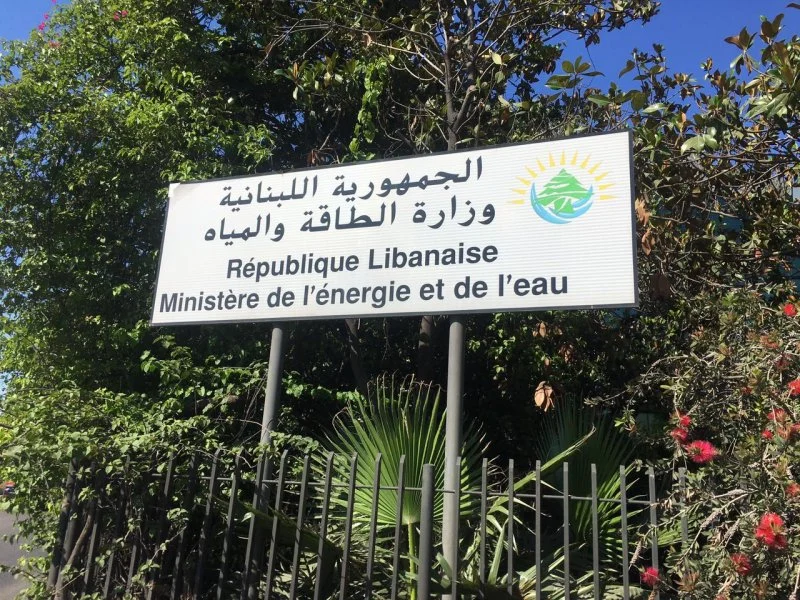
In response to the statement issued by the Media Office of the Ministry of Energy and Water under the title “Energy Clarifies Fallacies Regarding the Petroleum Products Tanker,” we declare in that we fully adhere to everything stated in our report published on Monday, December 5. We consider that the Ministry’s statement contains legal and factual fallacies and clearly attempts to disavow the explicit provisions of the Public Procurement Law and signed contracts.
Firstly, we have already clarified in that there are two guarantees that IPLOM International SA must provide, one of which relates to the diesel contract. We reiterate that diesel is the same as gas oil, in response to what was stated in the Ministry’s statement regarding the distinction between them, which is a confusion that reflects unacceptable technical and legal ignorance in a public utility.
Secondly, we confirm that the contract was signed on 12/16/2025, and the performance guarantee was supposed to be submitted immediately upon signing. According to the contract and the Public Procurement Law, the company’s failure to provide this guarantee within a period of 15 days legally requires the confiscation of the bid bond, which amounts to approximately $90,000 in the diesel tender, and the automatic termination of the contract without any further interpretation or elaboration.
Thirdly, we reveal that the Ministry of Energy, before publishing our report, did not take any action against the diesel tanker docked in Tripoli and did not initiate the application of legal provisions. After the publication of the report and the revelation of this negligence, the Minister of Energy took the initiative to send a letter to the company requesting it to submit a performance guarantee, granting it an additional period of five days, in a clear violation of the law that requires the termination of the contract and the confiscation of the guarantee immediately after the expiry of the original deadline. Until Friday morning, the performance guarantee had not been submitted, and the contract had not been terminated, which constitutes a clear continuation of violating explicit provisions.
Fourthly, we remind that the company that won the tender is being prosecuted and is subject to investigations based on a report submitted by Engineer Fawzi Meshleb, and based on the signal of the Financial Prosecutor, which stipulated that payment be delayed until the investigations are completed. This procedure, from a legal point of view, is considered as a precautionary seizure until the final results are issued. We also remind that the Minister of Energy himself had stated in a previous media interview that he was informed of the decision of Judge Chaito to stop the payment and reserve the guarantees until the investigation is completed.
Fifthly, we express in our regret for the level reached by the Ministry of Energy’s statement, especially with regard to the expressions used against Engineer Fawzi Meshleb, which are expressions that do not befit an official administration or a minister in a government described as reformist. We affirm that Engineer Meshleb, through his reports, secured for the Lebanese state precautionary reservations exceeding 40 million dollars, in addition to seizing the Hawk III tanker, and imposing a fine of 10 million dollars by customs, which is the highest in the history of Lebanese customs.
We also affirm that Meshleb’s reports were the direct cause of stopping the organized theft series in the Russian fuel oil and gas oil file, and prevented Lebanon, the Banque du Liban, and the Ministry of Energy from being exposed to the risks of European and American sanctions, as a result of importing materials subject to international sanctions and laundering their source. Thanks to these documented reports, customs and judicial investigations were opened regarding hundreds of millions of dollars of public funds and a series of suspicious shipments and contracts, which put an end to a path that would have led the Lebanese state to a comprehensive international financial and legal isolation.
Sixthly, we announce in that we are in the process of publishing a detailed and documented report, presenting all stages of revealing the involvement of the Ministry of Energy and its approach to this file, based on documents and evidence, and clarifying to the public how the law was circumvented and how these practices were exposed in detail.
In conclusion, we affirm that the difference between us and the Minister of Energy and his advisor, Boutros Hadchiti, is that our only reference is the law, texts, and documents, while the Ministry’s statements, for us, have become nothing more than verbal arguments that do not befit a public utility and that the Lebanese administrative corps has not witnessed for decades.