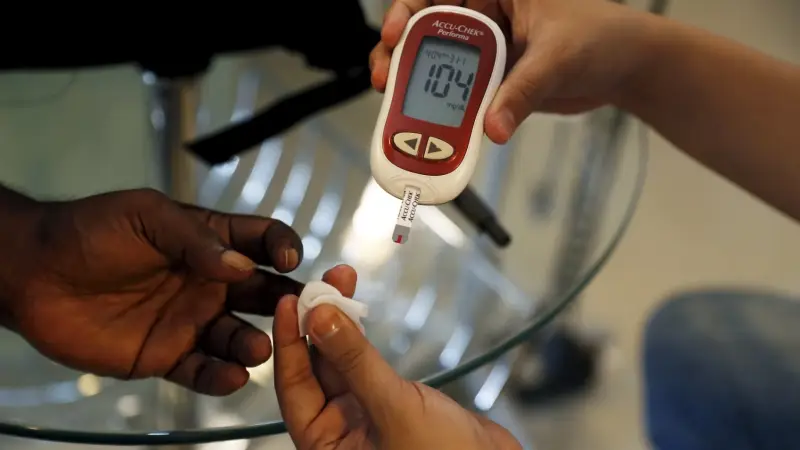
A recent study in Uganda has shown that newly discovered biomarkers may enable doctors to diagnose “type 2 diabetes” more accurately in people of African descent.
Researchers explained that most of the indicators currently used to detect “type 2 diabetes,” such as the “glycated hemoglobin” test, which measures blood sugar levels over a period of time, were identified through studies conducted on Europeans, and may be less accurate for Africans due to differences in genes and biological composition.
After a study involving 163 people with “type 2 diabetes” or at risk of developing it, in addition to 362 healthy Ugandan volunteers, the researchers concluded that there are 58 unique genetic variants for people of African descent that have not been previously identified.
The researchers noted in the study published in the journal “Nature Genetics” that 18 of these variants are associated with “type 2 diabetes,” including variants that can be treated with already available drugs.
“By focusing on Africans, we are uncovering biological information that has not been included in global diabetes research,” said Obiageli Nnaji from the “University of Exeter,” the study’s lead author, in a statement.
He added: “This shows that a one-size-fits-all approach to diagnosis and treatment is not enough. We need solutions that reflect the diversity of human biology.”