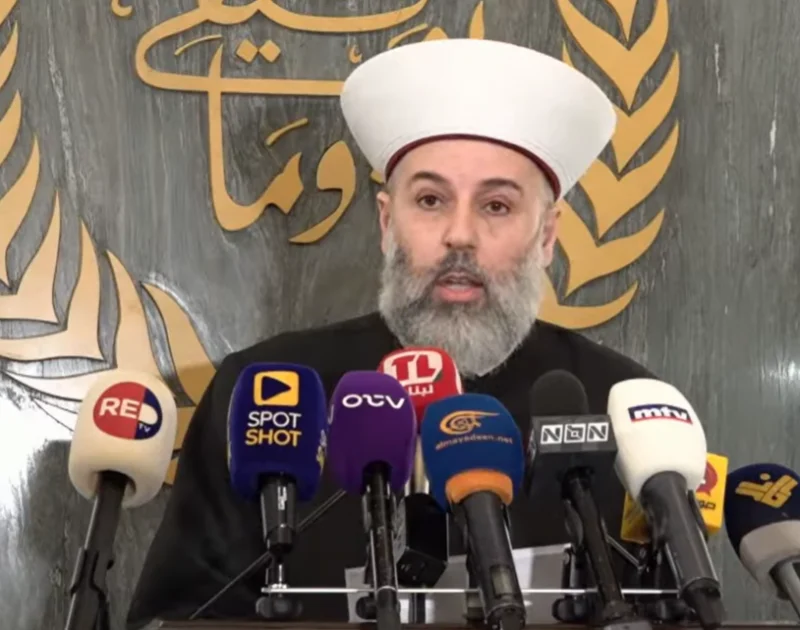
The Council of Muftis in Lebanon held a meeting chaired by the Mufti of the Lebanese Republic, Sheikh “Abdul Latif Deryan,” during which they discussed the current situation in the country and the dangers it faces. The Council emphasized the importance of spreading religious awareness and adherence to moral virtues, warning of the moral deterioration that threatens the existence of the Lebanese family. It also called on imams of mosques and preachers to direct their religious speeches towards adhering to national values, foremost of which are national unity, peaceful coexistence, civil peace, and national accord, and rejecting all forms of sectarian and doctrinal strife.
The Council issued a statement delivered by Council member Mufti Sheikh “Bakr Al-Rifai,” which included the following points:
First: Emphasizing the need for all Lebanese to return to the state as the only way to achieve salvation and get Lebanon out of crises and threats, restore security and stability, restore the state’s unity and its natural role, and impose the control of the army and the legitimate military and security forces completely, in a way that restores the state’s internal and external sovereignty over its territory and over all residents on its land.
Second: Calling for the rebuilding of a strong, capable, and just state that protects all Lebanese and defends them, restores its role and sovereignty, and respects its sovereign decisions as a sovereign constitutional authority that alone enjoys constitutional legitimacy, especially the decisions of the Council of Ministers dated 5 and 7/8/2025, in a way that ensures that there are no weapons for any military or security organization outside the framework of the state and its legitimate forces, in order to preserve the unity of the state and its national decision, and prevent Lebanon from becoming a headquarters or a corridor for destabilizing its Arab surroundings. The statement also called on the state to address the repercussions of the remnants of the defunct Syrian regime, and to affirm Lebanon’s relationship with its Arab surroundings.
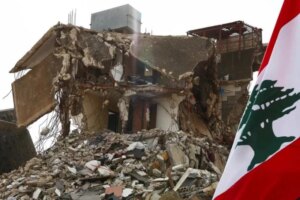
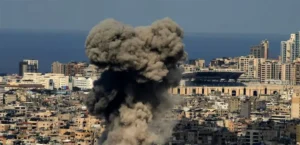
Third: Demanding the international community, especially the United Nations and the Security Council, to assume their responsibilities in maintaining international peace and security, and to oblige Israel to withdraw from all occupied Lebanese territories, especially the five points inside Lebanese territories in the south, to implement international legitimacy resolutions, especially Security Council Resolution No. 1701, and to stop daily acts of aggression against Lebanon, killing civilians, and demolishing homes.
Fourth: Condemning the acts of aggression committed against the Palestinian people in Gaza and the West Bank, in violation of the provisions of international law and humanitarian law, and the accompanying displacement of residents, demolition of homes, and displacement of families.
Fifth: Expressing regret for the talk and fabrications being circulated about the so-called “alleged prince case,” and attempts to involve Dar Al-Fatwa and the Supreme Islamic Sharia Council in it, while emphasizing their concern for Lebanese affairs and non-interference in the work of the judiciary and respect for investigations and judicial decisions to establish justice, reveal the truth, and apply the law to all.
Sixth: Emphasizing the role of Dar Al-Fatwa as a comprehensive national Islamic institution and its principles, considering that the unity of the Lebanese is the only way to save Lebanon. The statement stressed the continuation of Dar Al-Fatwa in strengthening national unity and coexistence, restoring the state’s authority over all its territory, preserving the security of the Lebanese, their dignity of living, rights and freedoms, achieving justice, equality, and the common good, especially in the case of Islamic detainees, adhering to the democratic parliamentary system, holding parliamentary elections on time, Lebanon’s Arab affiliation, implementing the Taif Agreement, abiding by the constitution, respecting international legitimacy resolutions, and supporting the government in the path of reforms, the latest of which is the financial gap law after reconsidering what is necessary according to the observations of the Parliament and financial and economic experts, in addition to launching the process of reconstruction and addressing the economic, financial and social conditions, in a way that restores financial, security and political stability and reassures the Lebanese about their present and future.