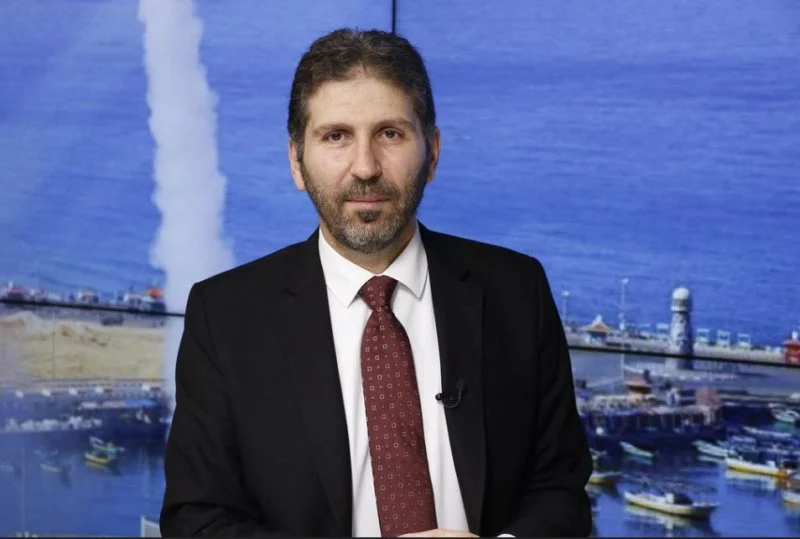
Member of the Strong Lebanon bloc, MP Samer Al-Tom, said in a statement to Al-Anbaa that “there is no real crisis between Lebanon and its neighbor Syria, but rather thorny, but not complicated, files that must be addressed based on the principle of good neighborliness and mutual respect.” He explained that the most important of these issues are the Syrian detainees in Lebanese prisons, the issue of Syrian displacement, the Lebanese forcibly disappeared at the hands of the former regime, in addition to securing the borders from both sides.
He added that “the issue of Syrian detainees in Lebanese prisons is the most complex and sensitive compared to the rest of the outstanding files, and addressing it requires a lot of accuracy because it involves a number of security considerations, the most serious of which is the attack on the Lebanese army and the threat to the national security of the Lebanese state,” stressing that the Lebanese, with their various political and sectarian affiliations, “are not about to trample on the blood of the army’s martyrs and close this file on the basis of ‘what is past is past’.”
He continued that “the issue of Syrian displacement in its two stages, the first during the rule of al-Assad, and the second after the current President Ahmed al-Shara took over the reins of power and leadership, requires the Lebanese and Syrian states to agree on a clear formula that accelerates the pace of the return of the displaced to their homes,” pointing out that this file “imposes burdens on the Lebanese treasury and the Lebanese economy, and the energy, water, education, health and environment sectors, that exceed its capacity to bear, in addition to depleting the infrastructure, which is on the verge of going out of service.”
Al-Tom, a cardiologist from the border town of Al-Qaa, which is separated from Syrian territory by only a narrow waterway, pointed out that “it is no secret that the vast majority of Syrian displaced persons entered Lebanese territory randomly, and by infiltrating day and night from illegal crossings,” indicating that “the presence of Syrian officers in Lebanon affiliated with the former regime cannot be denied or confirmed,” stressing “the need to wait for what the Lebanese army intelligence and the competent security services will reach and document, so that action can be taken accordingly.”
He stressed the importance of controlling the borders from both sides, “first, to stop human infiltration towards Lebanon, second, to prevent the smuggling of weapons, and third, to stop the smuggling of agricultural products from Syria, which directly causes the stagnation and spoilage of agricultural products in Lebanon,” considering that this matter “requires daily follow-up by the Lebanese and Syrian governments in a way that ensures the required protection for agricultural products in both countries.”
He continued, “We want the best and most cordial relations between Lebanon and Syria, through the role of constitutional institutions and through diplomatic channels, and on the basis of each country respecting the sovereignty of the other and its laws in force, as neither of them has an interest in the outbreak of crises, disputes and tensions that break the principle of good neighborliness between two countries that have historical relations at the social and family levels.”
In his answer to a question, Al-Tom concluded his speech by stressing that “the agreements and treaties between Lebanon and Syria are not sacrosanct, and are therefore subject either to cancellation or to the introduction of radical amendments,” pointing out that “the geopolitical changes that have occurred in the region and in a number of Western countries, most recently Venezuela, require their re-reading in a way that guarantees the interests of the two countries, provided that there is good and sincere intention, especially with regard to each respecting the sovereignty of the other.”