In the midst of the rapid changes the world is witnessing, America and its ally Israel are moving with calculated steps to establish a new reality based on military and economic control, and to modify the map of influence in the inflamed regions. In this context, Israel plays the role of the spearhead in the Middle East, exploiting the absolute American support to consolidate its influence and strike any force that may pose a threat to it in the future. Between the logic of “preemptive strikes” and the fragmentation of states and the weakening of armies, American and Israeli interests converge on one goal: reshaping the world according to a balance of power that guarantees permanent supremacy and prevents the emergence of any competing poles.
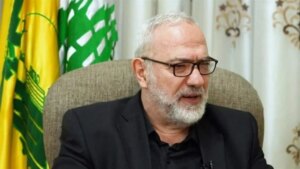
In an in-depth political analysis of regional and international developments, writer and political analyst Ibrahim Bayram presented a comprehensive view of the nature of the American-Israeli role, and its impact on the region in general, and Lebanon in particular, in an interview with .
A project ongoing since the fall of the Soviet Union
Bayram believes that what the United States did in Venezuela falls within an old strategic project that began with the collapse of the Soviet Union in 1990, and aims to dominate the world’s wealth and control vital regions. He points out that Washington has never hidden its intentions towards Venezuela, but has publicly threatened its president, making what happened expected and not surprising.
He affirms that the United States continues to direct successive blows to all forces and regimes that declare their opposition to American hegemony, based on its feeling that it is at the height of its political and economic power. From this standpoint, Washington adopts a policy of preemptive strikes in preparation for a stage in which it may not have the same degree of influence and power.
Open mandate without restrictions
Regarding the repercussions of this course on Lebanon and giving Israel the green light to strike Lebanon, Bayram explains that the United States has long given Israel the green light to act as it wishes, noting that US President Donald Trump gave Israeli Prime Minister Benjamin Netanyahu the full right to assess the situation in a way that suits Israel’s interest, which practically means granting him an open “carte blanche”, whether to increase escalation or move towards an invasion.
Bayram affirms that Netanyahu enjoys absolute powers and acts on the basis of this mandate, expecting that he, in coordination with members of his government, will assess the requirements of the next stage, which makes eyes turn to the expected Israeli government meeting on Thursday. However, he also points out that Netanyahu does not actually need Trump’s approval, as he has become accustomed to implementing his policies without referring to Washington, even during the era of former US President Joe Biden.
Dismantling States
Bayram warns of a broad American-Israeli plan that aims to fragment states that are hostile to Israel. He explains that Israel began by striking the traditional Arab power represented by the armies in the neighboring countries, so that there is no longer any army capable of confronting it, neither in Syria nor in Iraq, while the Egyptian army remains restricted by a peace treaty that regulates its relationship with Israel.
In the same context, Israel, as Bayram explains, worked to strike various resistance forces, from “Fatah” and “Hamas” to “Hezbollah” and “The Popular Front”, forces that could have posed a real threat to it. He believes that the fall of the Syrian regime and the subsequent surrender of the alternative regime to almost complete Israeli conditions, accelerated the targeting and weakening of these forces.
Redrawing maps
Bayram believes that what is happening today is an organized dismantling of regimes extending from Syria to Sudan, Libya, Iraq, and Yemen, all the way to Somaliland, where American-Israeli influence intersects with the interests of Russia and China in the Horn of Africa, which is considered a strategically important region.
The Turkish-Israeli conflict
Regarding the Turkish-Israeli conflict, Bayram points out that Israel has made a clear decision to prevent the expansion of Turkish influence, whether in Syria, Libya, or the Horn of Africa. He attributes this to Ankara’s pursuit of succeeding Iranian influence in these regions, and its attempt to assume the leadership of the Sunni Islamic world.
Despite the existence of economic cooperation between Turkey and Israel, the latter remains wary of Turkish ambitions, and also fears the jihadist forces present within the armed formations in Syria. Bayram points out that Israeli concern about Turkey also stems from the lack of guarantee of the continuation of the undeclared truce with it, as any internal political shift could make Ankara in a position of direct hostility to Israel.
Deep-rooted popular rejection
Bayram affirms that Israel, despite signing peace and normalization treaties with a number of Arab regimes, does not enjoy any popular acceptance in the Arab and Islamic worlds. The peoples, in his opinion, have never accepted Israel, even if normalization is imposed on the regimes by political force and international pressure, warning that all these equations may collapse in a single moment in the future.
Lebanon in the next stage
Returning to the Lebanese situation, and what may result from the expected Israeli government meeting, Bayram presents a personal analysis in which he believes that Israel would prefer to maintain the current situation. However, he warns at the same time against relying on the Israeli mind, which does not stop planning for the new stage that has already begun.
He believes that Israel feels comfortable today with its current reality, and continues to pressure the Lebanese state through the “mechanism”, but the top priority in its calculations remains Iran, as it is the biggest challenge in the current stage, which makes all possibilities open in light of regional developments.