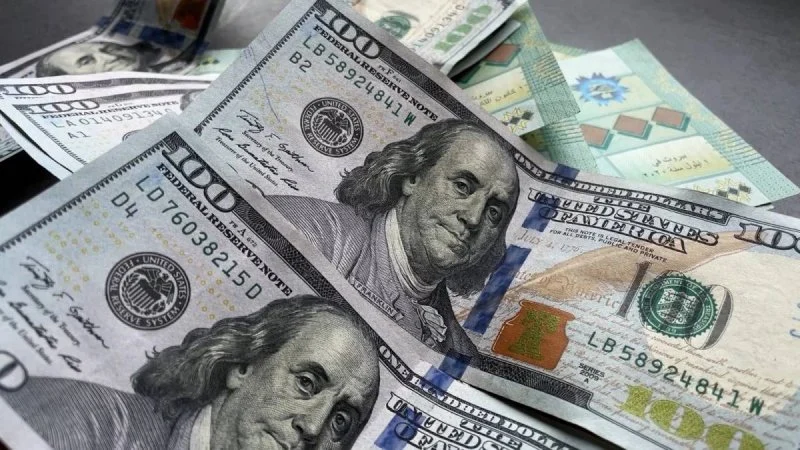
Starting next week, the “Gap” draft law will be the subject of heated debate in the House of Representatives, becoming a crucial milestone in the course of the economic crisis. This is because it moves the issue of financial losses from a phase of continuous denial to something resembling an attempt to acknowledge its magnitude. However, this acknowledgment remains incomplete as long as it is not accompanied by a clear definition of responsibilities and does not remove the deep state of mistrust between the state and the citizens.
In theory, the draft law aims to determine the “gap” resulting from the accumulation of deficits and erroneous monetary and fiscal policies, in preparation for restructuring the banking sector and restoring a minimum of stability. However, the fundamental dispute does not revolve around the figures as much as it focuses on how to distribute the losses, and which party will bear the largest share of them.
Here, informed sources confirm to that the French presidential envoy, Jean-Yves Le Drian, will follow “on the ground” and from Beirut the course of the “Gap” law in Parliament, amid increasing objections at the internal level. These sources believe that the banks’ warning against the project, which would impose losses exceeding their capacity and threaten what remains of the sector, is still under discussion on how to turn it into legal steps in the coming period.
In this context, informed sources place the declared concerns of depositors, about the draft law that has not provided clear guarantees to protect their deposits, especially small and medium-sized ones. This is because the proposed formula raises fears of “legalizing” the process of writing off deposits or converting them into long-term obligations.
Sources reveal that the draft law that reached the House of Representatives is the eleventh version that has been worked on since 2020, after the International Monetary Fund rejected all previous versions. They explain that the Fund’s condition is focused on full recognition of losses in exchange for any support program, while also emphasizing structural reforms that include restructuring banks, strengthening governance, and unifying the exchange rate.
Accordingly, informed sources acknowledge that the “Gap” draft law will not be just a law that the House of Representatives discusses and approves, but rather a legal mechanism aimed at moving from the stage of managing the financial crisis to the stage of deferring it, amid a clear inability to address its causes and hold accountable those responsible for wasting billions. In other words, the legislation will not be the beginning of recovery, but a new chapter in an ongoing crisis.