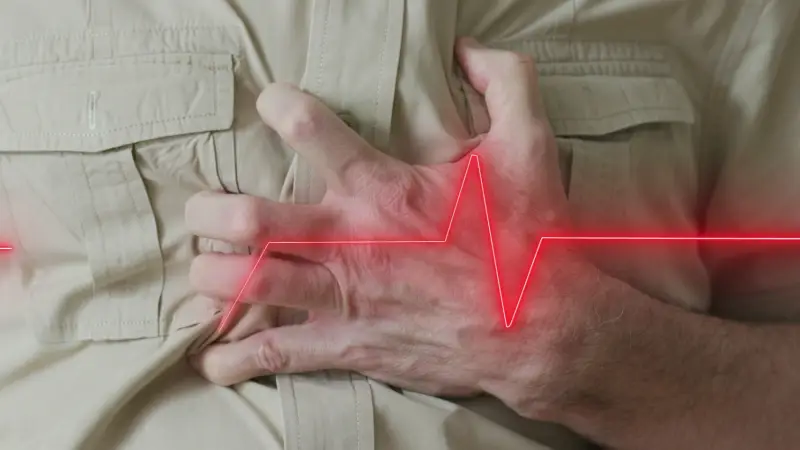
What is the relationship between clogged arteries and a heart attack? A heart attack is a medical emergency that requires immediate medical attention. However, sometimes warning signs may appear weeks in advance, requiring a doctor’s consultation.
Clogged Arteries
First, what exactly happens during a heart attack? A heart attack occurs when there is a blockage in the blood vessels that supply the heart with oxygen and nutrients, known as the coronary arteries.
According to the German Heart Foundation, one of the main reasons for this is the accumulation of calcium deposits in these arteries.
Since this process happens gradually, symptoms often appear before complete blockage, when the blood vessels have already narrowed, a condition known as coronary heart disease.
Symptoms of a Heart Attack
A common symptom of coronary heart disease is “angina pectoris.”
Those affected experience pain, pressure, or tightness in the chest, with difficulty breathing. If these symptoms appear during physical exertion and improve with rest, a doctor should be consulted.
However, even less severe symptoms can be early signs of a heart attack and should be checked medically, as advised by the German Heart Foundation.
This includes difficulty climbing stairs for more than two weeks, feeling weak, unexplained shortness of breath, or rapid fatigue.
All of these symptoms are caused by clogged arteries, which are the main cause of a heart attack.
Where Does the Danger Lie?
It becomes dangerous when “angina pectoris,” i.e., pain, pressure, or shortness of breath, occurs suddenly even at rest. This may indicate an impending heart attack. This phase may last for several weeks, but sometimes for only a few hours.
If you wake up at night with chest pain, you should call emergency services immediately.
In the event of a heart attack, every minute is important, as there is a risk of permanent heart failure and cardiac arrest.
The symptoms are:
- Sudden onset of severe pain in the chest or behind the sternum that lasts for more than 5 minutes.
- Pain that spreads to other parts of the body such as the arms (usually the left arm), upper abdomen, back, neck, jaw, or shoulder blades.
- Tightness and severe pressure in the chest.
- Severe burning in the chest, which may resemble heartburn.
Symptoms of a Heart Attack in Women
It is important to note that women often experience heart attacks differently.
Sometimes, women especially experience non-specific symptoms, such as pain in the upper abdomen, which can be confused with stomach pain, nausea, vomiting, dizziness, lightheadedness, or unexplained fatigue.