– Bassima Atwi
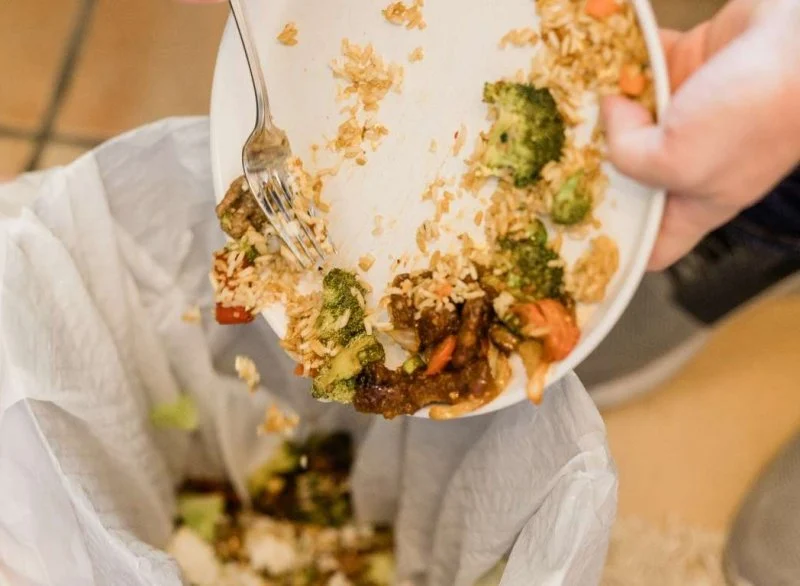
The joy of Christmas is not complete without the family gathering at the dinner table. Therefore, preparing the most delicious dishes and desserts is a well-established social tradition around the world, regardless of the evolution of lifestyles. However, the consumerism that has come to dominate the celebrations and reshape them away from the values of humility that the holiday represents, causes various economic and social damages. According to the United Nations Environment Programme and international organizations, the rate of food waste during the holiday season increases by between 25% and 30% due to increased consumption and celebrations. Globally, 931 million tons of food are wasted annually, which represents one-third of the food we produce, and is equivalent to more than one billion meals a day being thrown in the trash.
The problem of food waste during the holidays is a major problem resulting from over-purchasing and preparation, and causes economic consequences in wasting resources and contributing to climate change (water, energy, land), in addition to increasing greenhouse gas emissions when disposing of buried food. Therefore, reducing waste contributes to sustainability and environmental protection. This can be achieved through prior planning, buying only what is needed, proper storage, turning leftovers into new recipes (such as soups and breadcrumbs), freezing the excess, encouraging guests to take leftover food with them, and donating to charities instead of throwing it away.
Among the reasons that lead to food waste during the holidays are: over-preparation and the desire to present a full table, which leads to cooking larger quantities than needed, over-purchasing, i.e., buying large quantities of food in anticipation of guests, which causes spoilage of what is not eaten, and also improper storage, i.e., leaving food outside the refrigerator for a long time or not knowing how to preserve leftovers.
Practical solutions to reduce waste include prior planning, i.e., creating an accurate shopping list to buy what is necessary to avoid buying large, unnecessary quantities. In addition to controlling quantities, i.e., cooking quantities suitable for the actual number of guests to avoid large surpluses. As well as managing leftover food after the holiday ends, i.e., freezing excess meat and vegetables to use later in soups or gravy, and reinventing recipes such as using chicken in sandwiches, vegetables in soups, and leftover bread for breadcrumbs. The most important thing is smart food storage, i.e., immediate refrigeration and freezing, and placing leftovers in the refrigerator or freezer within two hours to preserve them, and sharing and donating excess food and encouraging guests to take leftover food with them, and donating to charities that receive surplus food and distribute it to those in need. Decomposable food scraps can also be used to make compost instead of throwing them in the trash.
Lebanon’s experience
In Lebanon, charities are making great efforts in this area. Experts point out that the Lebanese are able to reduce the amount of food wasted, provided that everyone takes responsibility in this matter, especially since 30 to 40 percent of the amount of food in Lebanon is wasted for several reasons, according to a report by the Ministry of Agriculture in September 2025.
It is worth noting that many major stores and restaurants donate food to associations and institutions that are concerned with delivering meals to the poor, especially in this exceptional stage that weighs heavily on the shoulders of all citizens, to reduce food waste and ward off the specter of hunger that threatens large segments of Lebanese society, due to the poverty that now affects about 74 percent of the population. This donation has significantly reduced the rate of waste in these institutions, as confirmed by those in charge, in the hope of achieving the desired goal of sustainable development that the rate of waste reduction reaches one hundred percent in the next few years.