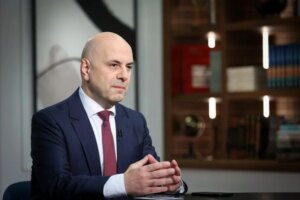
Both the “Democratic Gathering” and the “Progressive Socialist Party” affirmed that their handling of the financial gap law project was based on scientific foundations, stemming from the Progressive Socialist Party’s keenness to approve a clear law that addresses the financial gap problem and guarantees the restoration of the rights of all depositors, especially those with medium and small capital, as they are the backbone of the national economy. The two parties clarified that the proposals submitted aim to achieve a fair distribution of responsibilities and protect the rights of depositors.
The statement issued added that these proposals aim to increase the revenues of the Lebanese state to enable it to fulfill its responsibilities and contribute to restoring depositors’ funds and closing the financial gap, in addition to ensuring that the gold reserve held by the Banque du Liban is not touched, as it represents a national wealth and is owned by all Lebanese, and it is not permissible to use it as collateral or liquidate it to cover losses resulting from financial and monetary policies that did not take into account potential risks.
The statement pointed out that one of the most important problems in the draft law is the absence of a clear and binding figure for the size of the financial gap within the legislative text. The law speaks of losses and a financial gap without precisely specifying its value, and leaves the determination of this to subsequent audit operations. The statement considered that this method not only reduces transparency but also opens the door to political interpretation and accounting manipulation, and leaves depositors in a state of constant ambiguity regarding the fate of their deposits.
Accordingly, the Democratic Gathering and the Progressive Socialist Party presented their proposals that could contribute to strengthening state revenues to enable it to fulfill its obligations, and included the following: approval of the wealth tax law, which was proposed by the head of the “Democratic Gathering,” MP Taymour Joumblatt, in 2021, which presents a modern vision for the progressive tax on funds, properties, and unexploited agricultural lands, and reflects the concept of social justice and national solidarity; collecting the state’s dues from the quarries and crushers sector, according to the proposal submitted by the “Democratic Gathering” in 2024, which stipulates imposing fines on the exploitation and operation of quarries and crushers that are unlicensed or violate the terms of the license; settling the status of marine and river properties and regulating their investment in a way that preserves them and secures additional and sustainable income for the public treasury; increasing customs revenues by activating customs work and combating smuggling, to reduce the large losses incurred by the state annually; imposing a tax on profits resulting from the repayment of dollar loans in Lebanese pounds, in a way that achieves a degree of justice between borrowers and depositors; and collecting fines on the profits of the “Sayrafa” platform for non-employees, in addition to collecting taxes imposed on companies that benefited from the subsidy policy.