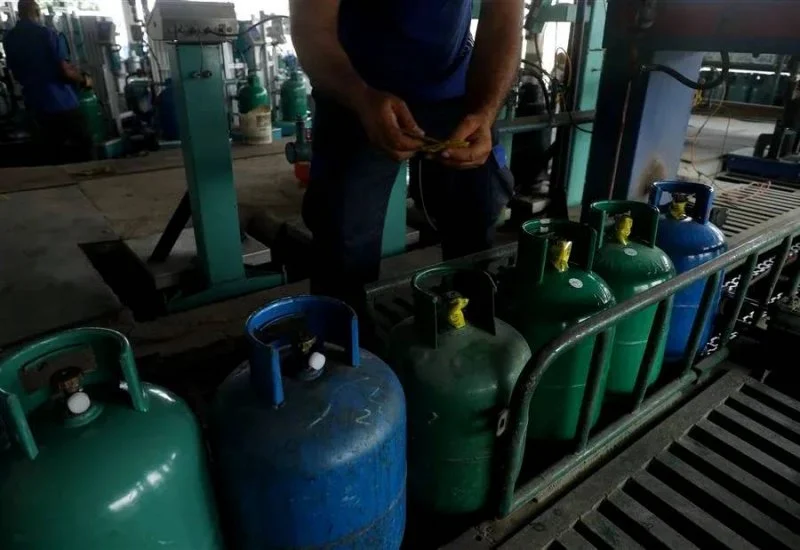
As fuel prices decreased on Tuesday morning, gas was excluded from this decrease, recording a new increase added to a series of successive increases in recent weeks. This contradiction raised questions about the causes of high prices and their impact as the country enters the winter season.
In this context, Farid Zeno, head of the Syndicate of Workers and Distributors in the Gas and Supplies Sector, explained in a statement that what is happening in the market is not specific to Lebanon, but is a direct result of global market movements. With the beginning of winter, global demand for gas increases due to countries seeking to store additional quantities to meet heating needs, which leads to higher prices.
Zeno added that the current increase in the price of a gas cylinder is not due to internal factors or changes in the cost of distribution locally, but is a direct reflection of global price changes, which Lebanon adheres to according to the approved pricing mechanism.
He pointed out that the price of a cylinder is subject to an official schedule issued by the Ministry of Energy twice a week, on Tuesdays and Fridays, and is determined based on global indicators, which makes the local market affected by any international increase or decrease.
Regarding future expectations, Zeno did not rule out the possibility of recording additional increases if global demand continues to rise in the coming weeks, but at the same time, he ruled out the occurrence of large increases as we have seen in the past, stressing that the current situation seems gradual and controlled, and does not indicate that the price of the cylinder will reach very high levels, such as exceeding the threshold of one and a half million Lira.
The Ministry of Energy set the price of a gas cylinder this morning with an increase of 15,000 Lebanese Lira, bringing the new price to about one million and 184 thousand Lira, and this issue is expected to remain under follow-up with the increasing cold and rising domestic consumption.