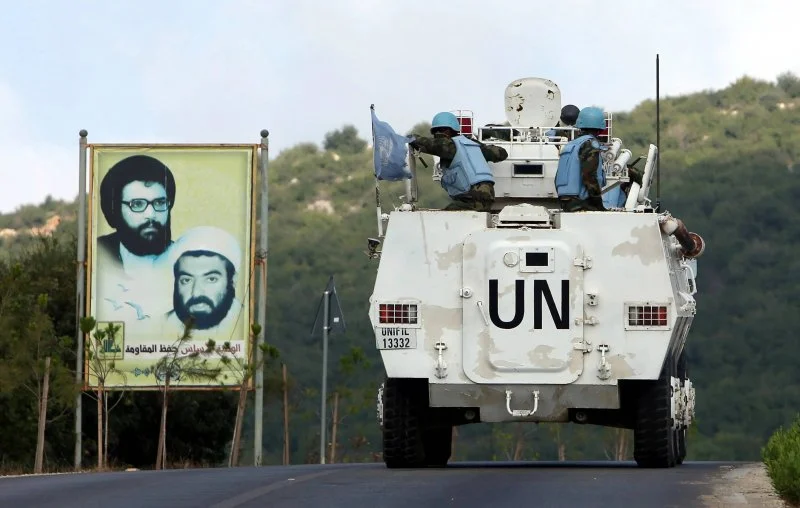
A noticeable positive atmosphere prevails in the scene in the last days of the current year, but that does not necessarily mean optimism about what awaits Lebanon in the coming year, as the date for the end of UNIFIL’s mission approaches, whose elements have been gradually withdrawing from Lebanon for weeks, in addition to reducing its budget since last August.
Strategic expert Brigadier General (Ret.) Naji Malaeb reveals positive indicators that have begun to appear on the local scene, the first of which is the position issued by Prime Minister Nawaf Salam regarding the second phase of “weapon exclusivity,” which was not just a statement but “a directive to the head of the Lebanese delegation to the mechanism committee, former Ambassador Simon Karam.”
, Brigadier General Malaeb believes that the Prime Minister’s statement represents a public commitment that the phase that will end south of the Litani River in a few days will be followed by a second phase, which may include the area between the Awali and Litani rivers, but not outside the southern region at the present time.
As for the second positive factor, according to Malaeb, it is the US Congress’s approval to sell Lebanon military equipment worth $90 million to equip the army to carry out its tasks as the government pledged, which means that the American decision to support the Lebanese army has been established. The third factor is the meeting held in Paris in the presence of Army Commander Rodolphe Heckel, an American delegate, a Saudi delegate, and the French Chief of Staff, which is considered an important development as next February was set as the date for a conference to support the army.
Malaeb explains that postponing the conference to February is linked to what the Lebanese army can achieve at this stage.
In this context, Malaeb points to the UNIFIL report that confirmed that no weapons entered “Hezbollah” in the south, and to the tour conducted by the army commander with ambassadors and military attachés in the south last week, considering that this constitutes a response to Israel’s claims that “the army was unable to carry out the mission south of the Litani,” and he confirms that the army was able to accomplish what was asked of it.
Malaeb also praises UNIFIL’s efforts in cleaning an area of 200 meters of mines in Blida, stressing that it is a qualitative development that indicates the start of demining in the border area.
Regarding the features of the next stage, Malaeb believes that there was enough time to convince the party’s environment that it is no longer able to prove that it is a force similar to what the Israeli enemy currently possesses, but if it continues to be stubborn, it will only be to say that “if we have not broken, then we are victorious,” which is the slogan that liberation movements always adopt.
Accordingly, the approach followed by the Presidency of the Republic and the government in following up communications with “Hezbollah” in the “weapon exclusivity” file, leading to the American conviction of the need to contain the party’s weapon instead of disarming it, is evidence, according to Malaeb, that “time has eliminated many of the false ambitions that Israel imposed on the American vision.”
In contrast, regarding the challenges of the coming year, Malaeb talks about that “it will be the year of the end of UNIFIL’s work, which raises a set of questions related to what the scene in the south will be like without UNIFIL, and whether the security zone proposed in Syria will extend to southern Lebanon, meaning that “there will be no borders in the future”?
Malaeb concludes by asserting that “UNIFIL’s departure is the title of suffering in Lebanon in 2026.”