In this regard, US Republican Senator Lindsey Graham accused Hezbollah of trying to restore its military strength, considering that the party “is seeking to manufacture more weapons,” describing this as “unacceptable,” during a visit to Israel.
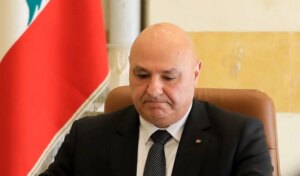
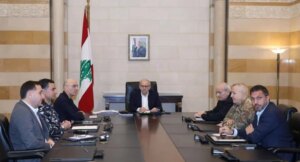
Graham’s statements come after Lebanese Prime Minister Nawaf Salam confirmed that the first phase of the plan to confine weapons south of the Litani is nearing completion, noting the state’s readiness to move to the second phase north of the river, according to the plan prepared by the Lebanese army on behalf of the government, while emphasizing the importance of providing full support to the military establishment.
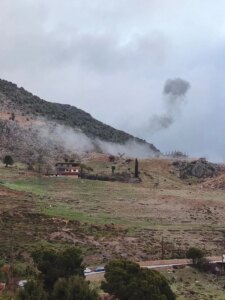
On the ground, the Lebanese plan is progressing in light of the continuation of Israeli operations in the south. The Israeli army announced on Sunday that it had targeted two Hezbollah members in the Yater area, despite the ceasefire agreement in force since November 26, 2024.
Israeli army spokesman Avichay Adraee said, via the “X” platform, that the targeting targeted “two armed elements” in the same area, raising new questions about the stability of the truce and commitment to it.
In contrast, Hezbollah affirms its cooperation with the Lebanese army in implementing the plan to confine weapons south of the Litani. MP Amin Shari, a member of the party’s parliamentary bloc, indicated that this cooperation is taking place “completely,” but he questioned the seriousness of the international community in supporting the Lebanese army, especially after the postponement of the Paris conference to February.
Shari stressed that any negotiation path with Israel, according to the party’s vision, leads to “more concessions,” considering that Lebanon has not yet achieved any tangible gains, and called for the launch of an internal Lebanese dialogue leading to a unified national position based on protecting sovereignty and stopping Israeli attacks.
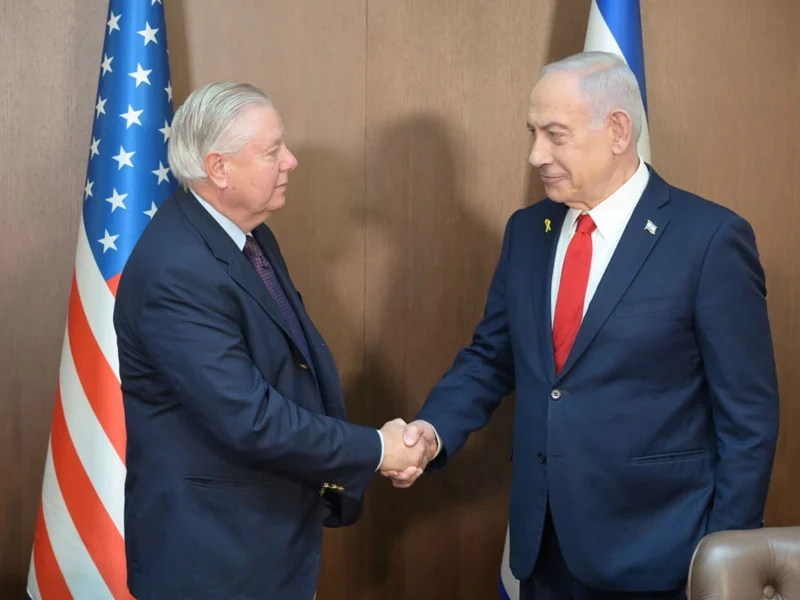
In a related context, Israeli Prime Minister Benjamin Netanyahu met Senator Graham in Tel Aviv, in a high-level meeting followed by a joint press conference, during which the latter warned of security developments he described as “disturbing,” noting that the Hamas movement is working to rebuild its military capabilities in the Gaza Strip and seeks to consolidate its rule there.
Graham added that “Hezbollah in the north continues to strengthen its military arsenal,” considering that this poses a direct threat to the stability of Lebanon and the region, and said: “It is in the interest of Lebanon and the region for Hezbollah to give up its weapons.”
In a direct comment, Netanyahu told Graham: “You are right in both cases,” praising him and describing him as “a great friend of Israel.”
In the same context, Al-Hadath channel quoted an American official as saying that “Hezbollah has maintained active weapons smuggling networks through Syria and on the border with Lebanon,” noting that Iran “uses various methods to deliver weapons to its allies in the region by land and sea.”
He added that Iranian weapons are smuggled to northeastern Syria, where local forces and smuggling networks are active, before being transported later to Lebanon, as part of a path that Washington considers one of Tehran’s regional priorities.