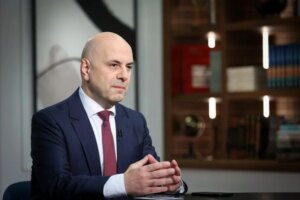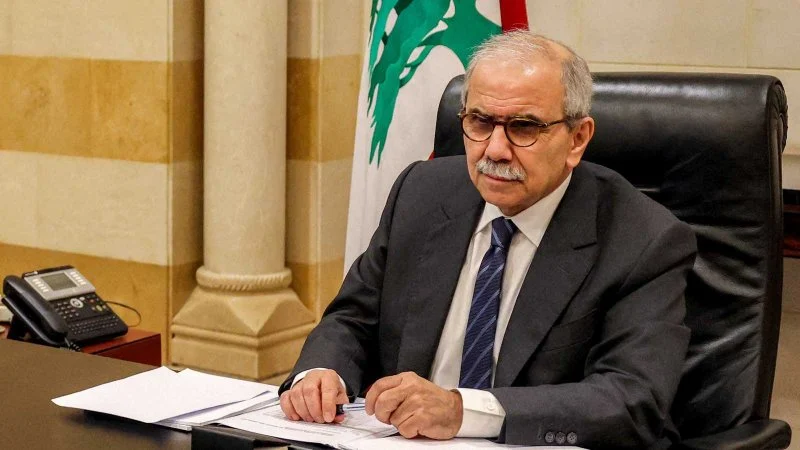
Salam explained that the first pillar, sovereignty, is based on a clear affirmation that the Lebanese state alone is authorized to bear arms within its borders, and that it alone has the authority to make decisions related to war and peace. He mentioned that on August 5, the government directed the Lebanese army to prepare a comprehensive plan aimed at confining weapons to the state in all regions, before approving a plan a month later that sets a three-month period to impose absolute control over weapons south of the Litani River and contain any weapons in the rest of the regions.
The Prime Minister affirmed that the authorities have strengthened security at Beirut International Airport and border crossings, dismantled “hundreds of illegal weapons depots,” and hampered the work of networks smuggling weapons, drugs, and other contraband.
As for the second pillar, reform, Salam affirmed that it is necessary to revive the economy and strengthen institutions, pointing to the approval of a law lifting banking secrecy and a law for managing banking crises, and the preparation of a new “long-awaited” law that guarantees justice for depositors through a fair and transparent distribution of losses resulting from the financial collapse. He stated that these reforms are essential to reaching a program with the International Monetary Fund, and to dismantling the cash economy that has become fertile ground for money laundering and organized crime.
Salam pointed to progress in the work on a law that enhances the independence of the judiciary and oversight bodies, which contributes to revitalizing the electricity, aviation, and telecommunications sectors, in addition to adopting merit-based standards in government appointments. However, he acknowledged that “much remains to be done,” and that confronting the challenges requires continuous international support.
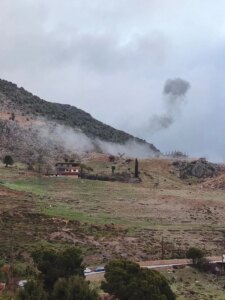
On the security side, Salam affirmed that Lebanon continues its commitment to the relevant Security Council resolutions and to the declaration of cessation of hostilities signed with Israel in November 2024, while pointing out that Israel “continues to violate Lebanese sovereignty, detain Lebanese citizens, and occupy at least five points in the south,” actions he considered as maintaining a state of instability, increasing the chances of renewed conflict, and undermining the government’s efforts to restore state authority.
Regarding the economic aspect, the Prime Minister stressed that Lebanon “will spare no effort” to secure the necessary funding for reconstruction and development, calling on its international partners to provide support, and warning that the absence of this support will enable “vested interests” to fill the vacuum and return the country to a cycle of patronage, corruption, and impunity.
Salam concluded by saying that Lebanon is “important for the stability of the region,” and that the government is not asking international partners to do its work on its behalf, “but to stand by its side and help it succeed.”